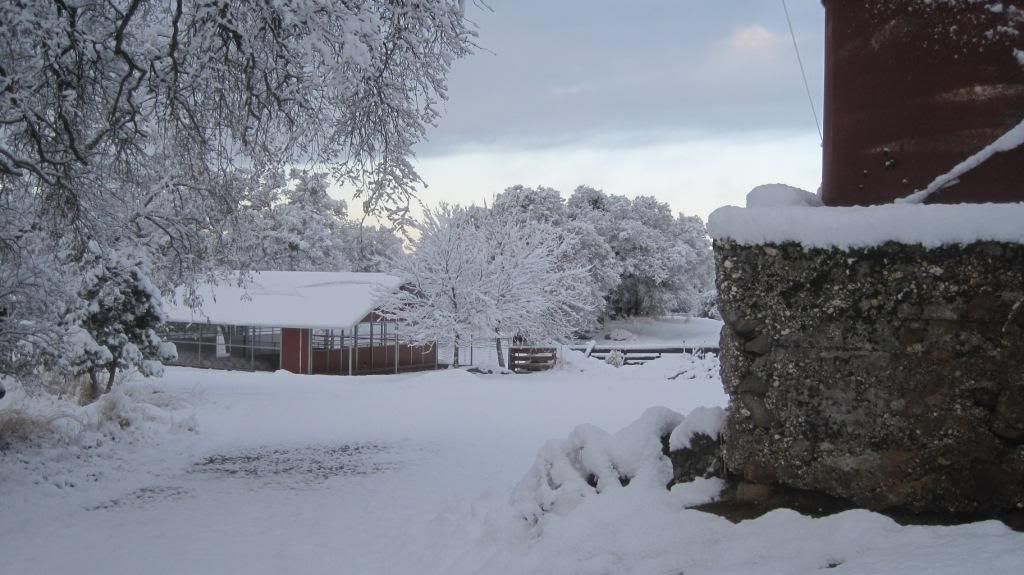
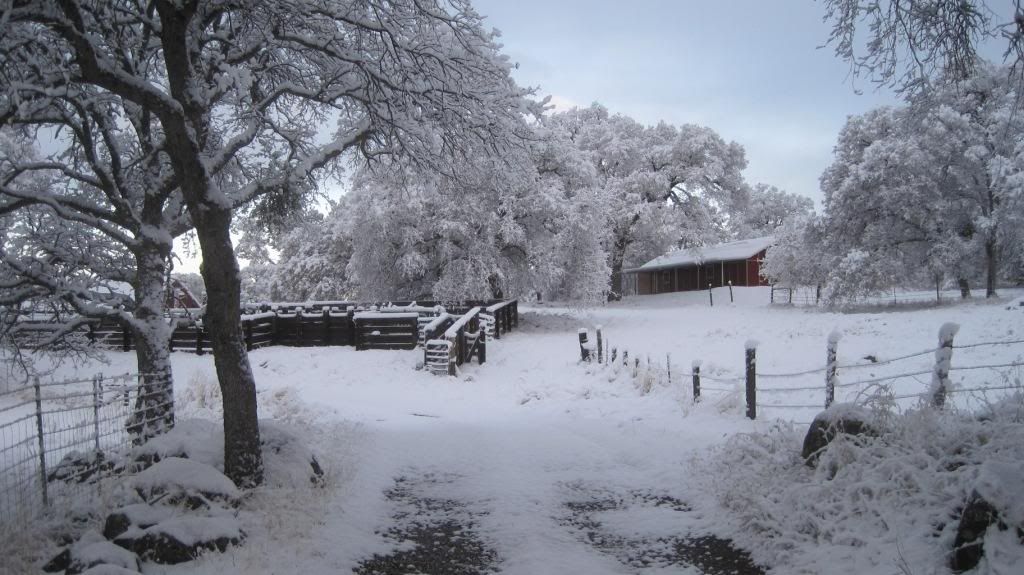
Some people look at this image and imagine themselves there, looking out onto the snow-flaked scene with a warm mug of cocoa in hands. Me, the pigs and chickens? No thank you!!!
This is the new bunny barn - the rabbits are pretty darn hardy and didn't blink an eyelash when shown this photograph. They were ready to frolick in that snow!
But when I showed the chickens their new barn, covered in the freezing snow, they were not impressed. They have actually demanded sweaters and space heaters.
The pigs too. They want fleece winter coats and warm mittens for their hooves. They don't do cold.
Cows, goats and sheep shrugged their shoulders - they are cold tolerant animals. What's 8-10 inches of snow between friends?
This is a good reminder for us still in Vacaville that we need to be cognizant of the fact that some of the species we rescue are not cold tolerant. While Grass Valley will be great for those same species in the summer, where temperatures are much cooler, the winter creates a whole new dilemma. We'll be looking into ways to keep the chickens and pigs extra warm during the cold, winter months.
We are, however, extremely excited to see how the animals react next winter when they step out of warm barns and into a winter wonderland! None of them have seen snow before, it should be a lot of fun.
(Do not tell my boss, but I will be calling in sick any day we have eight inches of snow, I'm with the chickens and pigs on this one!)
Showing posts with label grass valley. Show all posts
Vertical Farming, feeding the future
While I was reading this article, I mistakenly thought they were referring to vertical integration of the farming industry.
I'm happy to report my wrongness or, at the very least, my inability to read slowly.
Vertical farming is way cooler than vertical integration. On a scale of 1-10, 10 being the coolest, vertical farming is a twelve. There is even a project aptly titled The Vertical Farm Project. At it's most fundamental vertical farming optimizes the use of space to create beautiful, sky-bound gardens to feed communities. There may be cons to this nifty idea, but you will not convince me of them until you convince me that pyramids suck. They don't, by the way. We could have pyramid gardens! Sign me up, The Vertical Farm Project! Click on the Pyramid of Green Goodness to see more possible designs.
This is just a neat idea. Animal Place won't have a vertical farm, but we will have a community garden. It will be vegan and little children may romp and pull carrots to consume like rabbits (twitching nose optional). We'll educate people on how to create their own community garden or how to grow small, urban gardens. Mainly, we want people to learn how to feed themselves - it's beautifully simple, really.
And if you are anywhere near NJIT (which sounds like n-idjit, but I won't hold it against New Jersey's science and technology school) on September 30, definitely head on over to hear vertical farming advocate Dickson D. Despommier speak. The event is free (yes, please!) and is from 3:00-4:30 pm in the NJIT Campus Center Atrium.
I'm happy to report my wrongness or, at the very least, my inability to read slowly.
Vertical farming is way cooler than vertical integration. On a scale of 1-10, 10 being the coolest, vertical farming is a twelve. There is even a project aptly titled The Vertical Farm Project. At it's most fundamental vertical farming optimizes the use of space to create beautiful, sky-bound gardens to feed communities. There may be cons to this nifty idea, but you will not convince me of them until you convince me that pyramids suck. They don't, by the way. We could have pyramid gardens! Sign me up, The Vertical Farm Project! Click on the Pyramid of Green Goodness to see more possible designs.
This is just a neat idea. Animal Place won't have a vertical farm, but we will have a community garden. It will be vegan and little children may romp and pull carrots to consume like rabbits (twitching nose optional). We'll educate people on how to create their own community garden or how to grow small, urban gardens. Mainly, we want people to learn how to feed themselves - it's beautifully simple, really.
And if you are anywhere near NJIT (which sounds like n-idjit, but I won't hold it against New Jersey's science and technology school) on September 30, definitely head on over to hear vertical farming advocate Dickson D. Despommier speak. The event is free (yes, please!) and is from 3:00-4:30 pm in the NJIT Campus Center Atrium.
The sanctuary denizens are not alone and a small GV update
Yesterday, while out getting an awesome picture of Patty, I heard quite the ground squirrel ruckus and immediately gazed upwards to see what was what. About a 100' away from me, a juvenile hawk sat in a tree, trying to figure out the best way to hunt ground squirrels. I'm pretty sure the hawk is a Cooper's hawk (you ornithologists can tell me if I'm wrong).

Whatever he* is, he's beautiful. He was learning how to hunt on his own and, admittedly, it was hard not to cheer for the little colony of ground squirrels. None of us at the sanctuary enjoy the "seedier" side of the natural world. The hawk has to eat, of course.
Amazingly, even though the hawk could take out a full-grown white leghorn hen (who are the size of some of the adult ground squirrels), he showed an absolute disinterest in even flying over the chicken enclosure. I imagine part of that is there are a lot of ground squirrels, I mean A LOT. Both the chickens and ground squirrels also post sentries to monitor both the sky and ground for predators, so both species are on high alert.
The sanctuary residents do share the property with wildlife. Coyotes, bobcat, rattlesnakes, ground squirrels, a kajillion species of birds, mountain lion, deer, wild turkeys - all of them make their appearance from time to time. Fence lines mean nothing to them.
In all the years the sanctuary has been here, very few animals have been lost due to predation. It is a very real risk. Always and forever. We bring to this property species' who have a long history of being killed by other species. Everything we do, we try to mitigate those risks. For the most sensitive species, like the rabbits and poultry, we make sure their enclosures are extra secure, surrounded by predator-proof fencing with overhangs and rollerbars. Fences are dug down into the ground and the chickens/turkeys are always locked up at night (bunnies are in a 1,000 square foot enclosure). Young animals are never introduced until they are large enough to defend themselves.
We will maintain our high level of predator protection when we move all the animals to Grass Valley....which is one of the reasons it is taking a little longer than expected for the move. The fencing is vital in making sure the chickens and rabbits are safe and that all the other species have enough room to roam without going so far as to be really isolated. So we're taking it slow. I'm sure you appreciate that. I know the chickens and turkeys do. :)
*Or she, no offense intended. :)
Whatever he* is, he's beautiful. He was learning how to hunt on his own and, admittedly, it was hard not to cheer for the little colony of ground squirrels. None of us at the sanctuary enjoy the "seedier" side of the natural world. The hawk has to eat, of course.
Amazingly, even though the hawk could take out a full-grown white leghorn hen (who are the size of some of the adult ground squirrels), he showed an absolute disinterest in even flying over the chicken enclosure. I imagine part of that is there are a lot of ground squirrels, I mean A LOT. Both the chickens and ground squirrels also post sentries to monitor both the sky and ground for predators, so both species are on high alert.
The sanctuary residents do share the property with wildlife. Coyotes, bobcat, rattlesnakes, ground squirrels, a kajillion species of birds, mountain lion, deer, wild turkeys - all of them make their appearance from time to time. Fence lines mean nothing to them.
In all the years the sanctuary has been here, very few animals have been lost due to predation. It is a very real risk. Always and forever. We bring to this property species' who have a long history of being killed by other species. Everything we do, we try to mitigate those risks. For the most sensitive species, like the rabbits and poultry, we make sure their enclosures are extra secure, surrounded by predator-proof fencing with overhangs and rollerbars. Fences are dug down into the ground and the chickens/turkeys are always locked up at night (bunnies are in a 1,000 square foot enclosure). Young animals are never introduced until they are large enough to defend themselves.
We will maintain our high level of predator protection when we move all the animals to Grass Valley....which is one of the reasons it is taking a little longer than expected for the move. The fencing is vital in making sure the chickens and rabbits are safe and that all the other species have enough room to roam without going so far as to be really isolated. So we're taking it slow. I'm sure you appreciate that. I know the chickens and turkeys do. :)
*Or she, no offense intended. :)
Labels:
grass valley,
sanctuary life,
wildlife
We have barn lift-off
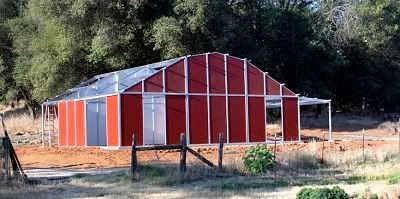
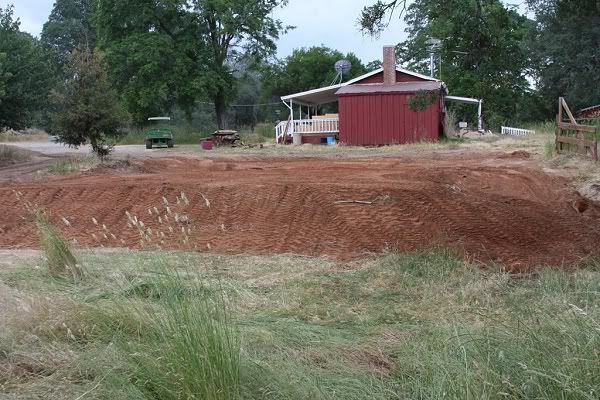
The potbellied pig barn is up! Sorta! It's still missing a roof, which will offend the potbellied pigs to no end, but hey, it's looking pretty darn stylish. The roof will be up soon and so will the other barns. After that, we have the hefty task of figuring out fencing and predator protection. We've been meeting weekly on the fencing issue - who knew a bunch of metal posts could require such intense discussion! But it's so important to make sure the animals have the right amount of space with appropriate fencing...and that we can afford it! You can help by donating some funds or getting us a sweet deal on t-posts and 4" field fencing (not 4" tall, mind you).
On moving animals
Two things happened today that got me thinking about this subject. Looming in the background, of course, is the impending move two hours north-east to a 600-acre facility in Grass Valley. This is huge, especially for the animals.
Just this morning, two 3-mos old piglets who we had spayed at UC Davis headed off to their new home in Arizona. The drive no doubt will be a little stressful, though after the first hour or so of driving, the adopters reported both piglets were asleep. Pigs are extremely sensitive to stress during transport, so it was nice hearing a positive update.
On a related though less uplifting note, there is a cow-calf operation next to the sanctuary. It's ironic. Here cows give birth to calves who eventually end up at feedlots and the slaughterhouse. Yesterday, the rancher moved a new bull into the pasture, even though the pasture already has one, very large, very protective bull. The new bull initially spent the first several hours calling to his missing herd, cows and calves he had probably been with for the past eight or nine months. Of course this attracted the attention of the resident bull who just had to flip the new bull up and over the fence. It was a gravity-defying display. How confusing it must be for this bull, to have once been so content with familiar friends to now being unceremoniously flung over a fence. He's back in the pasture and the two will figure out their differences. Some of the cows will take pity (or find attraction in) on the newcomer and all will be well...but these first few weeks are no fun for any of the bovines involved (or those of us who try to leave the property only to be faced with a wayward 1,500 lb angus bull).
Which of course got me thinking about what it will be like for the animals when we move. It can't be anything but stressful and scary. We cannot explain to the animals what's in store for them, that there will be green pastures year-round and more roam to explore. I have a feeling the goats and cattle will be the least stressed, owing to the fact they are very curious animals. The pigs will probably be very melodramatic and angsty for the first few weeks until they find the year-round mud-hole and some good rooting spots. I'm not sure about the rabbits or the sheep (who are fond of one particular hill dotting the property). I'm betting the peepers will find the transport the most unnerving but their new digs full of beautiful and wondrous things. It's a big step up for them, really.
In any event, for those of you who have made moves with animals, let us know how you made the transition easier for them. We want to make this the least stressful move we can!
Just this morning, two 3-mos old piglets who we had spayed at UC Davis headed off to their new home in Arizona. The drive no doubt will be a little stressful, though after the first hour or so of driving, the adopters reported both piglets were asleep. Pigs are extremely sensitive to stress during transport, so it was nice hearing a positive update.
On a related though less uplifting note, there is a cow-calf operation next to the sanctuary. It's ironic. Here cows give birth to calves who eventually end up at feedlots and the slaughterhouse. Yesterday, the rancher moved a new bull into the pasture, even though the pasture already has one, very large, very protective bull. The new bull initially spent the first several hours calling to his missing herd, cows and calves he had probably been with for the past eight or nine months. Of course this attracted the attention of the resident bull who just had to flip the new bull up and over the fence. It was a gravity-defying display. How confusing it must be for this bull, to have once been so content with familiar friends to now being unceremoniously flung over a fence. He's back in the pasture and the two will figure out their differences. Some of the cows will take pity (or find attraction in) on the newcomer and all will be well...but these first few weeks are no fun for any of the bovines involved (or those of us who try to leave the property only to be faced with a wayward 1,500 lb angus bull).
Which of course got me thinking about what it will be like for the animals when we move. It can't be anything but stressful and scary. We cannot explain to the animals what's in store for them, that there will be green pastures year-round and more roam to explore. I have a feeling the goats and cattle will be the least stressed, owing to the fact they are very curious animals. The pigs will probably be very melodramatic and angsty for the first few weeks until they find the year-round mud-hole and some good rooting spots. I'm not sure about the rabbits or the sheep (who are fond of one particular hill dotting the property). I'm betting the peepers will find the transport the most unnerving but their new digs full of beautiful and wondrous things. It's a big step up for them, really.
In any event, for those of you who have made moves with animals, let us know how you made the transition easier for them. We want to make this the least stressful move we can!
Making the grade: A Grass Valley Update
This move from our 60-acre sanctuary in Vacaville to a 600-acre sanctuary in Grass Valley has been stressful and exciting....and we haven't even really moved yet!
After finalizing the purchase of the property, setting up our monthly mortgage (you can help with that!), we set out to find the perfect spots for chicken, rabbit, pig and potbellied pig barns. It wasn't easy! We had to work within the guidelines set forth by Nevada County Land Trust which included only building where existing buildings are in place and only adding structures within a 5-acre parcel. It was a challenge, but after weeks of meetings and discussions, we finally decided on four great sites for the barns!
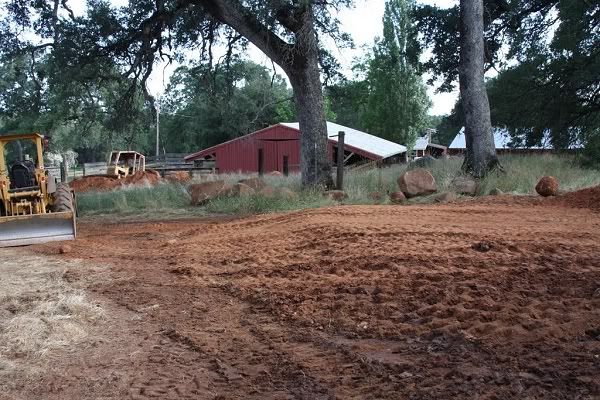
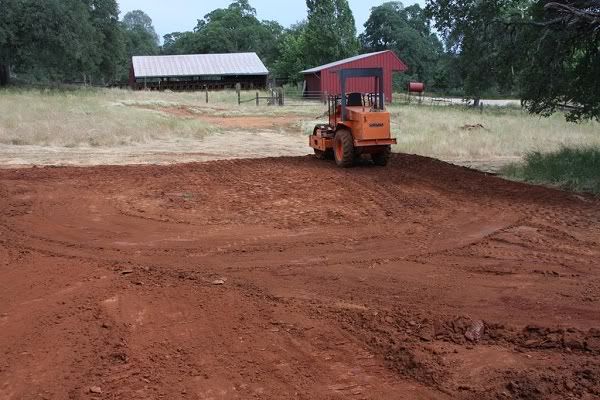
These aren't pictures of the barns (they're not up yet) but are pictures of where the barns will go.
Rabbits have a prime spot - nestled amongst some beautiful trees with an awesome view.
The rabbits will be getting a 1/3 more indoor space and a predator-proof, enriched outdoor area with tunnels and a lot of great and safe digging spots. We think they will be in bunny heaven!
The building in the background is one of the animal caregiver's cottages!
The pig barn is about the same size as our current barn but since the pigs will be getting their very own digs (no sheep, goats or cows allowed!) they will have access to more stalls. Right now, the goats and sheep like to steal stalls from the pigs!
We will be putting in a pig pond at some point and there is a lot of shade to keep our porcine friends cool.
The barn in the background will be for the cattle!
The chickens and turkeys will be enjoying a much more spacious barn and an enriched outdoor area. Their current setup has some steeper sections that are hard to navigate for some birds. The new spot is flat with trees, boulders and shrubbery. The chickens may even get a chance to roost in the trees, a behavior that is very ingrained into these birds.
No pictures of the potbellied pig area yet, but they too will be enjoying a lot more space. Right now, they have four small potbellied pig condos - at the new place, they'll be living the high life in their penthouse suites!
As you can see, a lot is getting done. We can't wait to actually move, but we still need to put up the actual barns, install fencing and make sure the sanctuary is move-in ready for the animals.
We'll keep you posted!

After finalizing the purchase of the property, setting up our monthly mortgage (you can help with that!), we set out to find the perfect spots for chicken, rabbit, pig and potbellied pig barns. It wasn't easy! We had to work within the guidelines set forth by Nevada County Land Trust which included only building where existing buildings are in place and only adding structures within a 5-acre parcel. It was a challenge, but after weeks of meetings and discussions, we finally decided on four great sites for the barns!
These aren't pictures of the barns (they're not up yet) but are pictures of where the barns will go.
The rabbits will be getting a 1/3 more indoor space and a predator-proof, enriched outdoor area with tunnels and a lot of great and safe digging spots. We think they will be in bunny heaven!
The building in the background is one of the animal caregiver's cottages!
We will be putting in a pig pond at some point and there is a lot of shade to keep our porcine friends cool.
The barn in the background will be for the cattle!
No pictures of the potbellied pig area yet, but they too will be enjoying a lot more space. Right now, they have four small potbellied pig condos - at the new place, they'll be living the high life in their penthouse suites!
As you can see, a lot is getting done. We can't wait to actually move, but we still need to put up the actual barns, install fencing and make sure the sanctuary is move-in ready for the animals.
We'll keep you posted!