
Showing posts with label rescues. Show all posts
Showing posts with label rescues. Show all posts
Check Out Rescued Hens
Rescue Ranch is our most innovative program - there are literally no others of its kind in the country! We work to facilitate the release of "spent" hens from egg farms and assist local animal controls with cruelty or neglect cases involving farmed animals.
The animals we take in are rehabilitated and then rehomed! In 2011 alone, we've been able to save the lives of 2,000 chickens, 19 turkeys, 3 sheep and five pigs!
Here is a video of 225 hens recently rescued and up for adoption.


Welcome Patty (II)

Such is the case with Patty the cow. She should be very honored because her namesake, Patty the Pig, is the best pig ever.
Patty is 8-10 years of age. She first lived on a dairy farm but had trouble with pregnancy. This is generally a death sentence for dairy cows whose only worth is how many babies they birth and how much milk they produce. A veterinary teaching hospital ran some medical tests on Patty and determined she'd make a good blood donor cow.
Yes, they use other cows to provide blood to client animals. Summer may have received some of Patty's blood when he arrived at the hospital six months ago. She was used in this manner for six years. Recently, she got sick of it, the poking and prodding was too much and she wanted out of the blood donor business. Normally, an unruly donor cow would be sent to auction and slaughter....but as with most rescues, Patty had an advocate to champion her cause. A veterinarian who had fallen in love with the gentle cow worked tirelessly to save her life and that of two other donor cows (who have adoptive homes, yay). The teaching hospital acquiesced and, after months of cutting through red tape, Patty finally arrived home.
We let in Nicholas to keep her company and this calmed Patty down immediately. She's lived with other cows, so we couldn't possibly leave her by herself - cattle are incredibly gregarious, a lone cow is generally a stressed out, unhappy one.We'll keep her in this pasture, with Nick as company, for several days. This will help her identify the barnyard as "home base".
It's been interesting - the past two cows, Elsa and now Patty, have both been around people a lot. Elsa spent fifteen years being milked and handled by humans of all ages. When we asked if she liked people, the response was an immediate Yes! But it turns out Elsa didn't really like all of the handling she endured. It's more than just the novelty of new surroundings - Elsa now has choices. She can choose to approach us or choose to walk away from us. If she wants to let me scratch her neck, that's her choice. If she doesn't, she moves away. She chooses where she grazes (tragically far enough away that staff have to hike up hills to check on her every day). All these choices! Patty's experience has probably been even less positive with people, so it isn't surprising that she decides to keep her distance. I did scratch her neck, long upward strokes to simulate a cow's tongue, and she lowered her head contentedly. But mostly, she just wants to be left alone.
It's so nice to watch animals get the opportunity to think for themselves, make their own decisions!
Meet the new rabbit posse
Bunny Haven is officially closed for business after three new rabbits arrived! No more applicants will be accepted, this club is full. Tima was rescued from a school that had become a dumping ground for unwanted bunnies. Animals began breeding until the population swelled to more than a hundred. The school wanted to kill all of the rabbits, while rescue agencies wished to, you know, crazily enough rescue them. Thankfully, compassion won out and all of the rabbits were saved. Animal Place accepted three in August - Boris, Holly and Emily. Lucia and Larissa were rescued while roaming free. They belonged to someone who neglected and mistreated the rabbits, even threatening to slaughter them. Both are incredibly shy, so capturing them photographically was quite the challenge!
You can click the photos to see a larger version.
Tima


Larissa


Lucia

You can click the photos to see a larger version.
Tima
Larissa
Lucia
Slaughterhouse owner pleads no contest
Last year, Santa Cruz County Animal Services director, Todd Stosuy noticed a cow with a broken horn spraying blood a foot in the air. The shocking sight led him to an even more tragic situation - a custom slaughterhouse. Goats, rabbits, pigs, chickens and other animals subsisted off of bread and tortillas. One goat was down, others were extremely emaciated. The owner claims the animals were for religious ceremonies and, as such, did not need to be stunned insensible to pain before having their throats cut.
Animal Control legally confiscated more than a dozen goats, two sheep and two rabbits. Unfortunately, California law did not permit the confiscation of the hundreds of remaining animals, all of whom are most likely dead by now.
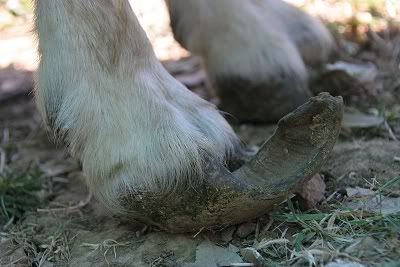
Animal Place accepted six goats and two sheep. The remaining goats and cow were sent to Farm Sanctuary. The animals were in varying degrees of poor health. Because of their poor diet of inappropriate feed, all the goats had various degrees of hoof and leg problems. We lost one goat. Another was so lame, she could only get around by crawling on her front knees. The two sheep were very thin, bones poking through wool. Most of the goats had overgrown hooves. Two animals were pregnant, one giving birth to twin kids, the other to a beautiful male lamb.
The district attorney decided to press charges against the owner, an incredible thing, all things considered. Dogs and cats are low on the prosecutorial totem pole, let alone goats, sheep and cattle.
Unlike so many other cases, the defense soon learned that all the witnesses called - from the director of animal control to our own Abby Patterson, sanctuary supervisor, well, they all showed up. Even the USDA inspector who was to testify on a video of an improper slaughter arrived. The defense decided to take a deal. The owner, Efrain Toledo Martinez, pled no contest to two counts of animal neglect. That is it. He has to pay $190 in court fees and $868 to Santa Cruz Animal Services. Animal Place alone exceeded $1,000 caring for these neglected animals. Of course we do not save lives because their care is paid for, but there is a disconnect in how much it really costs to make health more than a dozen sick, emaciated animals.
We are, of course, disappointed. Justice was not served, not by a long shot. We are grateful that the district attorney decided to pursue charges against Martinez. And a big thank you to Todd Stosuy & Santa Cruz County Animal Services for rescuing these animals...few animal control agencies can claim to have that much respect and compassion for farmed animals.
So how are all the animals doing?

Lucy, the goat who was so lame she had to walk on her knees is now living in Santa Cruz with C.A.P.E. A vet diagnosed her with severe laminits and, after complete removal of grain from her diet, Lucy now walks without a discernible limp. She even lets guardian, JP, hand-feed her - something she would never do a year ago!

Millie, Adele and the two babies she gave birth to at the sanctuary, Todd and Tess, live with a wonderful couple in Arizona. They drove all the way out to California to adopt the four goats. We've heard reports that Millie gets to come into the house and that Todd is a little bit of a head-butter.

Annie and Jessica remain at Animal Place, far too shy for adoption elsewhere. They integrated easily into the current herd. The two are like sisters, spending most of their time together and calling to each other when separated.

Etta, Virginia and the lamb she gave birth to, Lenny, are doing okay. Lenny is more than a year old and looks all grown up! He still spends a lot of time following his mom around. Etta hasn't gained much weight, so she's still skinny - we think it's because she's a really old sheep lady. She loves her back massages.
Of course, everyone should check out one of the first tender moments Virginia and Lenny shared - nose to snout mom and son.
Animal Control legally confiscated more than a dozen goats, two sheep and two rabbits. Unfortunately, California law did not permit the confiscation of the hundreds of remaining animals, all of whom are most likely dead by now.
Animal Place accepted six goats and two sheep. The remaining goats and cow were sent to Farm Sanctuary. The animals were in varying degrees of poor health. Because of their poor diet of inappropriate feed, all the goats had various degrees of hoof and leg problems. We lost one goat. Another was so lame, she could only get around by crawling on her front knees. The two sheep were very thin, bones poking through wool. Most of the goats had overgrown hooves. Two animals were pregnant, one giving birth to twin kids, the other to a beautiful male lamb.
The district attorney decided to press charges against the owner, an incredible thing, all things considered. Dogs and cats are low on the prosecutorial totem pole, let alone goats, sheep and cattle.
Unlike so many other cases, the defense soon learned that all the witnesses called - from the director of animal control to our own Abby Patterson, sanctuary supervisor, well, they all showed up. Even the USDA inspector who was to testify on a video of an improper slaughter arrived. The defense decided to take a deal. The owner, Efrain Toledo Martinez, pled no contest to two counts of animal neglect. That is it. He has to pay $190 in court fees and $868 to Santa Cruz Animal Services. Animal Place alone exceeded $1,000 caring for these neglected animals. Of course we do not save lives because their care is paid for, but there is a disconnect in how much it really costs to make health more than a dozen sick, emaciated animals.
We are, of course, disappointed. Justice was not served, not by a long shot. We are grateful that the district attorney decided to pursue charges against Martinez. And a big thank you to Todd Stosuy & Santa Cruz County Animal Services for rescuing these animals...few animal control agencies can claim to have that much respect and compassion for farmed animals.
So how are all the animals doing?
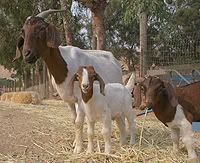
Of course, everyone should check out one of the first tender moments Virginia and Lenny shared - nose to snout mom and son.
Bovine Introductions

Animal Place has a small herd of cattle, five in all. Well, six with Elsa. With the exception of Sadie, the other cattle have essentially grown up here. Introductions went smoothly with Nicholas, Summer and Freedom because cattle tend to accept younger animals with great ease. Sadie spent nearly two years socially isolated while her mastitis was treated but when she finally was released - she booked it for Howie, touched noses and that was that, they were best friends for life.


This too shall pass for Elsa. But it's hard not to think about the unfairness of it all. Elsa should have spent her last few years on that little school farm with the cattle and people she knew and loved. Even the smallest, least cruel farm sends animals who have years left to live to slaughter. For at every farm, the value of an animal is not in how pushy she is or if she loves back scratches or how gentle he is with the calves, it's in how much milk, how many babies, how many pounds of flesh they produce.


Meet Elsa, the newest bovine resident!
Several months ago, we received a call from a local school that planned on sending their 15-yr-old Jersey cow to slaughter. The cow had been used as a teaching tool for her entire life, giving birth to nine calves and spending her life at this one farm. We couldn't let her be sent to her death, so we agreed to welcome the 6th cow to the sanctuary!
Today, Elsa the cow arrived. She's a gorgeous Jersey cow. Her life has been torn asunder. All she has known for fifteen years is this one farm, the people and visitors, the other cow. At Animal Place, her life is different and new. It is scary. She has spent the past two hours pacing in her temporary pasture, lowing for her bovine friends. When she was first unloaded from the stock trailer, she let out a big bellow. Hearing her, Nicholas came running. I mean, literally. The babies came over too but Howie & Sadie felt the distance was too far and they're waiting until later to say hi.
I WILL SAAAAAVE YOOOOUUU, MOOOOOO!

Nicholas is embarrassed by the fact that he is almost the same size as Elsa and, really, he should be a little bigger.

Nomnom Time!

BABIES!

And then he said that she said that HEY A CAMERA!

Pretty Lady

NOMS!

Yes, I can eat the hay.

So welcome home, Elsa. We hope you settle in soon and love your new digs and all of your new bovine buddies!
Rescued roosters need your help
Woodstock Farm Animal Sanctuary and Eastern Shore Sanctuary are both desperately seeking homes for roosters rescued in two separate incidents.
New York
New York City has hundreds of live-markets where people can purchase live animals for slaughter. Many of these markets are illegal. Animals are housed in overcrowded cages, abusively treated and cruelly slaughtered.
Recently, humane investigators in New York city confiscated 200 animals from a Bronx Halal market. Chickens, guinea fowl, rabbits and pigeons were among the animals saved. Woodstock agreed to take in the 120 chickens.
More than 80 of the birds are roosters. They are looking for compassionate homes. If you can provide a home to a rooster or two, please contact Woodstock with subject line "Possible Rooster Adoption".
Virginia
Several months ago, 21 roosters were confiscated from a cockfighting bust. Eastern Shore Sanctuary, who specializes in rehabilitating and working with former "fighting" roosters, will take in 8 of the birds. The remaining need placement by October 6 - next Tuesday. Otherwise, they will be killed.
It is a common misconception that all roosters are highly charged, dangerously aggressive birds bent on world destruction. Roosters are protectors, providers and friends. With the proper hen:rooster ratio and enough room, multiple roosters can cohabitate peacefully for years. At Animal Place, we have 15 roosters, 13 of whom live peaceably with one another - minor squabbles do occur, but that is true of the hens as well.
Roosters from fight busts can be integrated into flocks, depending on their personality and temperament. Eastern Shore has graciously offered phone and email assistance in caring for and integrating a rescued "fighting" rooster into a flock.
For more information, please contact Eastern Shore asap.
Please feel free to crosspost and spread the word.
New York
New York City has hundreds of live-markets where people can purchase live animals for slaughter. Many of these markets are illegal. Animals are housed in overcrowded cages, abusively treated and cruelly slaughtered.
Recently, humane investigators in New York city confiscated 200 animals from a Bronx Halal market. Chickens, guinea fowl, rabbits and pigeons were among the animals saved. Woodstock agreed to take in the 120 chickens.
More than 80 of the birds are roosters. They are looking for compassionate homes. If you can provide a home to a rooster or two, please contact Woodstock with subject line "Possible Rooster Adoption".
Virginia
Several months ago, 21 roosters were confiscated from a cockfighting bust. Eastern Shore Sanctuary, who specializes in rehabilitating and working with former "fighting" roosters, will take in 8 of the birds. The remaining need placement by October 6 - next Tuesday. Otherwise, they will be killed.
It is a common misconception that all roosters are highly charged, dangerously aggressive birds bent on world destruction. Roosters are protectors, providers and friends. With the proper hen:rooster ratio and enough room, multiple roosters can cohabitate peacefully for years. At Animal Place, we have 15 roosters, 13 of whom live peaceably with one another - minor squabbles do occur, but that is true of the hens as well.
Roosters from fight busts can be integrated into flocks, depending on their personality and temperament. Eastern Shore has graciously offered phone and email assistance in caring for and integrating a rescued "fighting" rooster into a flock.
For more information, please contact Eastern Shore asap.
Please feel free to crosspost and spread the word.
Rescued hens settling in

Ten of the hens were in pretty bad shape with significant feather loss. The location of the feather loss indicates that the farm has too many roosters for their hen population. The hens are a variety of different breeds and have been moved into a special-needs enclosure until they are healthy enough to be with the rest of the birds, including our resident roosters. We maintain a healthy rooster:hen ratio which helps avoid fighting amongst roosters and overmounting.
In addition to taking in the ten hens, we agreed to take in one adorable polish crested hen with a split beak. We hope when she is released into the main group, she will fall totally in love with Diablo. I have named her Anastasia which may or may not be approved by the rest of the staff.
Some more photos:


Please welcome....
Looloo, Boris and company! In the past few weeks, we have welcomed five new animals to the sanctuary. Here are a couple of the newest residents!
Looloo
 Looloo is a 9-week old buff orpington with luck on her side. Most likely purchased as a day-old chick, transported through the postal service, at the young age of 2-weeks, she ended up in the jaws of a feral cat!
Someone abandoned her in a neighborhood right near a small colony of feral cats. As she was attacked, her rescuer appeared and saved her from death.
Her rescuers made sure she recovered from her bite wounds, nursing her back to health. With several dogs, a toddler and feral cats to take care of, they felt it better to try and find her a permanent home.
So now she is spending her days at the sanctuary, learning to be a chicken but still loving to leap clumsily ont our laps for some loving.
You can see another photo of her here.
Boris and Company
 Several years ago, a teacher decided to release the classroom rabbits out onto school property. The rabbits were not castrated and soon began to reproduce. As people noticed the clearly domestic rabbits, the site became a dumping ground for unwanted bunnies. Not only that but people were allowing their dogs to kill the rabbits and teenagers were shooting the rabbits as well. It was an awful situation.
Rescue groups mobilized to trap, neuter and place the rabbits. We agreed to take a small number of rabbits, including Boris. Introducing rabbits to our current population is stressful for everyone and, with 24 rabbits, we are at our maximum. Boris is doing well with the new group and the remaining rescued bunnies will be introduced after they recover from surgery.
Looloo
Looloo is a 9-week old buff orpington with luck on her side. Most likely purchased as a day-old chick, transported through the postal service, at the young age of 2-weeks, she ended up in the jaws of a feral cat!Someone abandoned her in a neighborhood right near a small colony of feral cats. As she was attacked, her rescuer appeared and saved her from death.
Her rescuers made sure she recovered from her bite wounds, nursing her back to health. With several dogs, a toddler and feral cats to take care of, they felt it better to try and find her a permanent home.
So now she is spending her days at the sanctuary, learning to be a chicken but still loving to leap clumsily ont our laps for some loving.
You can see another photo of her here.
Boris and Company
Several years ago, a teacher decided to release the classroom rabbits out onto school property. The rabbits were not castrated and soon began to reproduce. As people noticed the clearly domestic rabbits, the site became a dumping ground for unwanted bunnies. Not only that but people were allowing their dogs to kill the rabbits and teenagers were shooting the rabbits as well. It was an awful situation.Rescue groups mobilized to trap, neuter and place the rabbits. We agreed to take a small number of rabbits, including Boris. Introducing rabbits to our current population is stressful for everyone and, with 24 rabbits, we are at our maximum. Boris is doing well with the new group and the remaining rescued bunnies will be introduced after they recover from surgery.
FFA versus Lambie
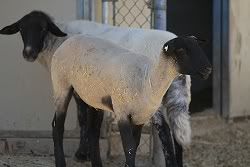 I'm going to be honest, FFA & 4-H animal programs creep me out. Betrayal, lies, misrepresentations are all at the heart of these programs.
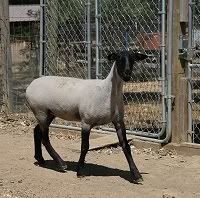
Saturday, we welcomed a 5-mos-old Suffolk lamb from a northern California high school FFA program. The student had not been told her lamb would end up at slaughter. Appalled, she sought out the aid of farmers, thinking one would understand this bond, this relationship she formed with the sheep. They didn't, because they could not move beyond the idea of "owner" and "property".
When farmers offered no help, she searched for sanctuaries and found Animal Place. The late-night email said the sheep had until Sunday to find a home. On Saturday, I called up the student and her mom to gather information. The first question I asked was whether the student planned on doing any more animal projects - an emphatic no. After talking with staff, we agreed to bring "Lambie" back to the sanctuary, saving her from the cruel fate of nearly all FFA/4-H animals, slaughter.
There's the betrayal. It stares these children in the face, smiles, wraps its greedy hands around small shoulders and says, this death, this slaughter, this is okay. For months, students have fed, watered, groomed, handled, socialized and, dare I say it, loved these animals. They have gazed into blameless eyes, have nursed sick to health and have been living a lie. When it comes time for the fair, the inevitable auction, children weep for their beloved friends, they cry tears of pain and anger that this animal who they have devoted heart and soul to is slated for death.
Then there is the parental perfidy. Parents see the heartache, know the bond has been formed....and yet. Our society seems to value a cognitive dissonance, a disconnect from empathy and compassion. Parents want their kids to learn responsibility, make connections, but they seem to expect their kids to just "toughen up" and get on with it. Not all parents do this, of course. Lambie's biggest advocate was the student's mother. She refused to acknowledge the teacher's desire to kill Lambie and instead made every effort to follow her daughter's heart.
Schools also play a role. They make deals with local banks to offer loans. These loans pay for the purchase and partial upkeep of the animal. Most students don't have jobs and while creating good credit is a noble thing indeed, the whole concept of a loan sets up the child for failure when s/he wants to save the animal. Now the child has a $2,500 loan to pay off and no money to do so....except the money they get from selling that animal at auction. Some schools purchase the animals outright, maintaining "ownership" rights. Schools tend to be unsupportive of students who want to place their animals in lieu of selling them.
 These animal programs are marketed to students as ways to garner "real world experience". In some ways, I guess they do - in the real world, people lie. In other ways, they fail. In the real world, most farmed animals live inside sheds and cages and are slaughtered in high-output processing facilities. Most never see the light of day or roam free. FFA/4-H programs do not emulate how most animals are raised or the scale of production and death. I'm not suggesting they do, either. But there should be duplicity, more honesty.
Little Lambie is lucky. We will place her in an appropriate home or keep her indefinitely at the sanctuary.
We think all children should spend some time with farmed animals, just not in the confines of a farm. Find a sanctuary in your area and encourage kids to visit and, age requirements permitting, volunteer. This is a much better way to learn responsibility and, more importantly, compassion and empathy.
And if you are feeling especially giving after reading this post (and of course you are), please consider a donation to Animal Place so that we may continue doing our life saving work. If you cannot make a monetary donation, check out Willy's wishlist.
Daring calf photo....
That's right, Summer and Freedom, have decided to bare it all in this shocking new photo! We warn you, there are a couple of cute little calf tooshes in this photo - it may not be work or child safe!
 All kidding aside, this photo shows the primary reasons Summer and Freedom were not bought by any of the farmers at the auction. Freedom doesn't have a tail and may have problems in the future because of it (he will definitely have many fly-woes). Summer (foreground) is very skinny and was very sickly when he first arrived. Because of his sickness, he lost a lot of hair that is - thankfully - growing back in wonderfully.
These two little guys are the dark underbelly of the dairy industry - the cruelty behind that glass of milk. Male dairy calves are absolutely worthless; farmers make no money off of them, even at auction. They are treated like trash.
But now they are happy and safe. It is a joy to watch them revel in being Calf Who Runs Free and Calf who Chews Hair. They prance and leap, exuding the carefree energy of the young. It will be fun watching them grow up, I'm sure you'll enjoy it too!
All kidding aside, this photo shows the primary reasons Summer and Freedom were not bought by any of the farmers at the auction. Freedom doesn't have a tail and may have problems in the future because of it (he will definitely have many fly-woes). Summer (foreground) is very skinny and was very sickly when he first arrived. Because of his sickness, he lost a lot of hair that is - thankfully - growing back in wonderfully.These two little guys are the dark underbelly of the dairy industry - the cruelty behind that glass of milk. Male dairy calves are absolutely worthless; farmers make no money off of them, even at auction. They are treated like trash.
But now they are happy and safe. It is a joy to watch them revel in being Calf Who Runs Free and Calf who Chews Hair. They prance and leap, exuding the carefree energy of the young. It will be fun watching them grow up, I'm sure you'll enjoy it too!
Summer and Freedom, two new calves
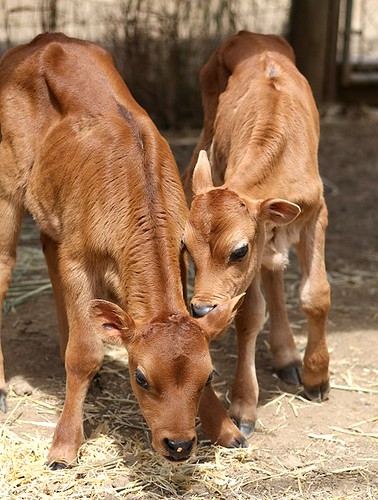 Our youngest and most recent residents are two adorable Jersey calves - Summer and Freedom.
Both were rescued from an auction where calves were being sold for between $3-20. The calves were all male, all Jerseys or Holsteins - all byproducts of the dairy industry.
We'll be reporting on the experience at auction in our next newsletter. For now, please enjoy a photo of the two little ones.
Aren't they precious?
All hens adopted!
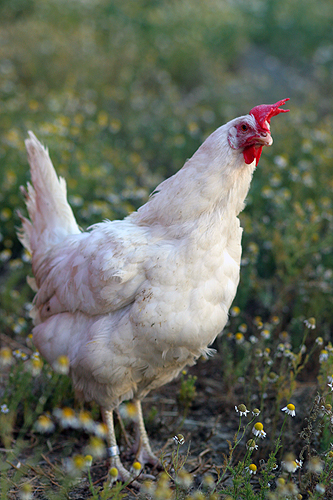 Great news: All the hens rescued from a small factory egg-laying farm have been adopted!
Animal Place took in nearly 400 of the 650 hens and worked furiously to place them as quickly, humanely and safely as possible. In about 3-weeks, dozens of people volunteered to adopt hens. And by December 27th, all the hens had been placed into permanent homes.
A big thank you to the animal care staff, education staff, news media outlets who covered the story, and all the adopters and rescuers who helped make this rescue a possibility!!
650 Hens Saved from Slaughter
| 650 Hens Rescued | |||||
 Nearly 650 hens from a factory farm are safe and sound, their lives spared because of the dedication and commitment of one individual. Ah, the power of one! Nearly 650 hens from a factory farm are safe and sound, their lives spared because of the dedication and commitment of one individual. Ah, the power of one!For two years, they have known only wire cages, darkness and overcrowding. Their beaks have been "trimmed", an industry euphemism for the painful severing of up to 2/3 of a hen's beak. Their brothers have all been killed, useless individuals to an egg farmer. Each bird's nails have grown two, three inches long. Feathers are missing, a result of forced molting and too much energy wasted on laying eggs.  Thanks to Animal Place and several shelters, these hens will have a life all chickens deserve - a free one. They will know how dirt, rocks and sand feel beneath their feet. They will see the sun, scratch in the dirt, lay their eggs in nests instead of on a cage floor. Their food will no longer contain antibiotics; their source of light will no longer be controlled by machines. They will receive names and their adopters will appreciate all their individual quirks. Thanks to Animal Place and several shelters, these hens will have a life all chickens deserve - a free one. They will know how dirt, rocks and sand feel beneath their feet. They will see the sun, scratch in the dirt, lay their eggs in nests instead of on a cage floor. Their food will no longer contain antibiotics; their source of light will no longer be controlled by machines. They will receive names and their adopters will appreciate all their individual quirks.Animal Place wishes you to consider adopting a vegan diet. No matter how nice a farm may be, when the bottom line is money, the individual animal's life is no longer valued. Free-range hens are still slaughtered at a young age; cage-free hens are still debeaked. Their value is not in their wonderful personalities but in how many eggs can be sucked from their slender bodies. Below we offer some alternatives to eggs we hope you will consider.
| |||||
Emergency Hen Rescue
 It was a little over three years ago when Animal Place, along with several other groups, rescued nearly 2,000 hens from a Gilroy egg-laying operation. Now we are faced with another rescue; this time 1,500 hens from a small cage operation.
We need good homes in California to take in these beautiful birds. They have endured so much; nearly two years in cages, debeaked, never knowing what it's like to run in the grass or stretch out for a sun-bath. If you can adopt a hen or two or know someone who can, please contact us at marji @ animalplace.org (minus spaces) or 707 449 4814. Please include the followig information:
Name:
Phone Number:
Full Address:
Number of hens you can adopt:
When you can adopt birds:
We are limited with how many we can take temporarily, so we're trying our best to find homes for all of the birds before they are slaughtered.
Every year, 250-300 million hens are slaughtered at 2 years of age because their egg production no longer matches the bottom line of money and greed. Currently, 95% of all birds raised for their eggs are housed in cages so small they cannot turn around. Even when not housed in cages, cage-free birds are still debeaked and slaughtered long before their natural lifespan. You can do your part by not purchasing eggs and seeking alternatives for your baking needs by using flaxseed, applesauce, or Ener-G egg replacer. Boundless substitutes are readily available.
Baby birds arrive at the sanctuary
 Twenty-five day-old chicks born in a hatchery in
 Young birds cannot regulate their body temperature effectively. It's why they need a mom. Right now, the baby birds are being kept in baby pens with special heating pads to keep them warm.
It is to tragic and tiresome hearing these stories of people buying birds and having those birds shipped through the postal service. In May, 2008 500 "peepers" (industry term: broilers) were rescued by Oakland Animal Services after fifty arrived dead and many were in distress. Thirteen of them came to Animal Place. These birds are lucky. Every year, thousands of baby birds die while being shipped through the mail.
 The regulations required to ensure a dog or cat is transported safely do not apply to poultry, and mortality is considered unavoidable. We would not tolerate that treatment with dogs and cats! The postal service has shown an unwillingness to ensure the safety and well-being of the animals they ship. Animal Place encourages people interested in poultry to adopt birds from their local shelter or sanctuary. Never allow living, sentient beings be shipped like they are inanimate objects.
Virginia has a baby!
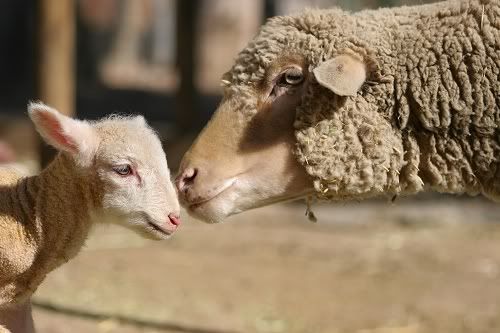
Rescued from a slaughterhouse four months ago, skinny and malnourished, we never thought Virginia was pregnant. Imagine our surprise when she gave birth to a beautiful baby boy!
Virginia is a stellar mom. She responds immediately when little boy calls for her. Checking in every few minu
 tes, she gives him gentle baths and makes sure he stays clean. It's funny to watch him look up to his mom, almost as if saying "What next, mom?" Think good thoughts for little boy and his mom - as an older sheep, Virginia isn't in the best of health. She has problems with her lung from previously untreated infections and her liver is failing. Through all of this, she has shown a remarkable will to live and a strong drive to take care of her baby. We'll do our best to keep her comfortable and happy, while also helping her take care of little boy.
Animal Place will continue to provide safe haven and stellar care for any and all animals who enter our barn doors. While we help them, the animals help us to keep hope alive for farmed animals everywhere. You can help by choosing a plant-based diet, by choosing cotton over wool, by being an integral part of the solution.
BABY GOATS take over the sanctuary!
Adele is one of the six goats and two sheep Animal Place took in from a slaughterhouse in Watsonville. She was pregnant and recently gave birth to two healthy kids, a boy and girl. They spend their days climbing the other goats, pretending they can eat hay and keeping a close eye on Adele (lest she try and make off with their milk). Kids are exuberant bundles of energy, making life very interesting at the sanctuary.


Animals rescued from slaughterhouse arrive
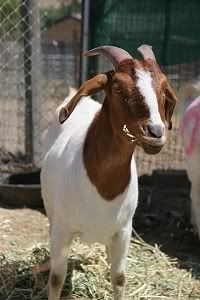 Six goats and two sheep are safe and sound at Animal Place after being rescued by Santa Cruz County animal control services from
a slaughterhouse. The goats and sheep are in poor shape, suffering from malnourishment, respiratory infections and hoof problems. Here, they will find kindness, good food, medical care and a bright future.
Twenty goats, two sheep, one cow and two rabbits are lucky survivors of a cruelty investigation Watsonville, California. Nearly a hundred pigs, goats, sheep, cattle, rabbits and chickens remain at the site. The animals were part of a live market and slaughterhouse, where buyers pick an animal to be killed and butchered on site.
Even though the animals had no food, no water, no shelter, even though they were skinny, diseased, with some unable to walk, state agricultural officials deemed the facility in compliance with state laws. That will only change when people stop seeing farmed animals as commodities and start seeing them as sentient beings, as capable of pain as dogs and cats.
We need your help!
The lucky eight at Animal Place need intensive care. They all have respiratory infections, overgrown hooves, and need special feed to get healthy. You can help with their recovery and rehabilitation by donating today. We rely exclusively on the kindness of people like you to help us help the animals.
Homes needed - after they get healthy, we'd love to find compassionate homes for these rescued goats and sheep. If you are interested in adoption, please contact us at info@animalplace.org or 707-449-4814. The animals won't be ready for placement for at least a month.
Animal Place coordinates rescue
It started with an e-mail. A shelter in California needed help with a cruelty case. Twenty-five ducks, eighteen rabbits, thirty geese, three turkeys and three pigeons were in desperate need of help.
The ducks were confined in a small, wire enclosure - no room to flap their wings and no water source. The property was littered with debris, clearly unsafe for the free-roaming geese and turkeys. A wire cage housed 18 un-neutered rabbits. It was not a happy place.
Animal Place could not take all the animals. So, we sent out an e-mail to our volunteer list asking for help in placing the animals. Our plea was answered, homes were found for all the animals...and a few remained here at the sanctuary.
Imagine for one second how different this story would be had we felt nothing could be done, we couldn't take all the animals, so why bother? But we knew one thing: People care and people care enough to help. We are so thankful to all the volunteers, the shelters and everyone who helped. We couldn't have done it without you!
The ducks were confined in a small, wire enclosure - no room to flap their wings and no water source. The property was littered with debris, clearly unsafe for the free-roaming geese and turkeys. A wire cage housed 18 un-neutered rabbits. It was not a happy place.
Animal Place could not take all the animals. So, we sent out an e-mail to our volunteer list asking for help in placing the animals. Our plea was answered, homes were found for all the animals...and a few remained here at the sanctuary.
Imagine for one second how different this story would be had we felt nothing could be done, we couldn't take all the animals, so why bother? But we knew one thing: People care and people care enough to help. We are so thankful to all the volunteers, the shelters and everyone who helped. We couldn't have done it without you!


