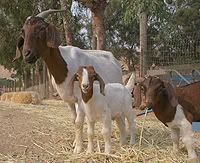
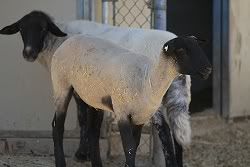
Showing posts with label sheep. Show all posts

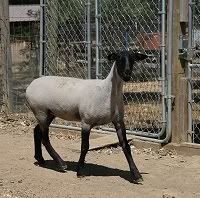
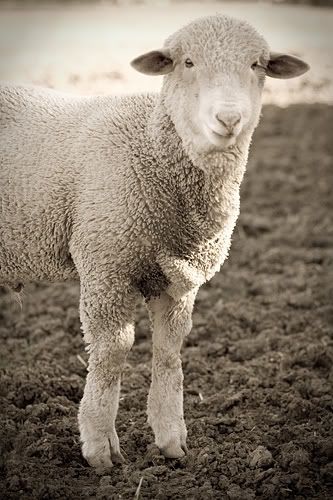
Simon Sheep

Simon Looking Curious
Simon 9/7/2003-6/18/2010

This is your last photo, Simon. It captures your essence perfectly. Curious, gentle with a hint of jester lurking behind gold-hued eyes.

Nearly seven years ago, you arrived on a cool fall morning - a day-old lamb and already forsaken by the world. Your mom abandoned you and so had the farmer. Like your rescuer, we promised that would never happen again. Promises can be such tricky things.

The first time I interacted with you, you head-butted me. Nine-months-old and king of the world. I cannot pinpoint the exact moment when you started to mellow, wanting to receive scratches instead of knocking heads. Whenever it was, I'm sure we all heaved a sigh of relief - finally the king had matured.

Your love was Sophie and the sheep. You wanted nothing to do with the other animals, and focused your entire being on monitoring the flock. I think you filled up with joy each time a new sheep was added - your flock of four grew to eight, and you were content.

In the past year, I watched with pleasure as you sought out people on tours, reveling in their scratches and massages. No more head-butting for you!

Last year, you struggled to overcome bladder stones, mineral deposits that blocked your urethra and stopped you from urinating. The pain you endured was immense and two surgeries later, we hoped against all hopes that it would never happen again.

This past Tuesday, you went blind. Your gut was not working, not moving like it should. We knew that in ruminants, an improper working stomach spells disaster. We threw everything at you to transform sickness into health. When you refused to eat, we rushed you to the veterinary hospital.

You were blocked again. The first attempt at flushing the stones out failed. Surgery was your only option. When they opened you up, the damage was extensive. To fix you meant to hurt you more, and it did not come with a remote guarantee of success. The likelihood of recovery, of never having stones again was nil. This was your final surgery, if you got stones again, we could not help you. Recovery from this surgery is one of the most painful, almost as painful as the stones themselves.

Of course, you were asleep for all this. Unconscious.

Your life, your death - it all boiled down to ten wrenching moments in which we had to decide. Could we put you through months of recovery, then almost immediate blockage, out of a small, tiny hope that maybe, just maybe, you'd live a few months more? Is that what you wanted? Perhaps it was, and perhaps we failed you in the ways only humans can. Perhaps it wasn't.

We took your life because we wanted to take away your immense suffering and almost certain, painful death. Selfish and selfless, the dichotomy of being responsible for another living being's care.

I will hold dear the final moments spent with you. You could not see me, but when you sniffed my hand, I could feel you relax. As I scratched soft cheek and chin, massaged short wool, you leaned into me. We took comfort in each other, in the knowledge that cheek to cheek, we were safe.

We'll miss you Simon. Your mischievous glances, playful nudges, and insistent ploys of garnering attention. Sophie will miss you, her adopted brother, the one who protected and comforted her. The flock is empty without your calm presence. I'm incredibly sorry we could not heal you.

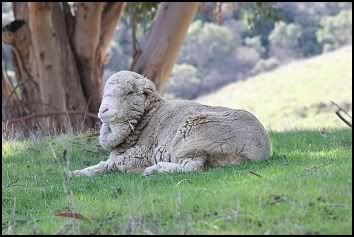
Simon chilling with the plum tree

Goat and Sheep: Play Fighting, Interesting Behavior

If you have an interest in inter-species play/fight behavior, then watch this video I took yesterday. Otherwise, it might be rather boring. You have been warned.

Animal Place is home to 11 goats and 8 sheep. The sheep have learned goats are more aggressive than they and many have horns. Every now and then, a younger sheep will show an interest in interacting with one of the goats.

Lenny, a 2-yr-old Merino wether (neutered) and Annie, a middle-aged Boer doe, began the dance of play. Some may argue they are displaying signs of dominance, but Lenny’s lack of intense aggression leads me to believe they are more play than actual fight. Further, Annie shows incredible restraint when she head-butts Lenny.

Sheep and goats are different in obvious and not-so-obvious ways. Goats are browsers while sheep are grazers – both are ruminants, with a four-chambered stomach. The horns on goats and sheep differ. When approached by potential predators, sheep form a tight flock and tend to run away. Goats tend to form a tight herd, turn to face the predator in a straight line, and only back down if forced to (I’ve seen foolish dogs head-butted and tossed by goats). There is one sheep at Animal Place who acts like a goat when faced with a dog, and he once “saved” the sheep flock from a roaming Border Collie by charging down the hill and chasing the dog off. (He came up to me quite pleased with himself). So, of course, there are individual variances and personalities.

When fighting, sheep back up and charge; goats circle around, move a few feet away, rear up at an angle, and then land hard for the head-butt. The fighting “head-butt” behavior is also a form of play and a way to interact socially with conspecifics and, dangerously, sometimes with humans as well.

The Video
Annie exhibits classic goat head-butting behavior. Lenny does not exhibit classic sheep head-butting behavior and tries, in his own small way, to emulate Annie. He does not have the behavioral inclination to rear up or angle himself, but you can see him try a couple of times to hop a little before butting heads.

You can also see how restrained Annie is in her rearing and butting behavior. Instead of ramming full-force, she slows slightly before making contact with Lenny. I think this shows Annie’s ability to modify her behavior to accommodate Lenny. She does not do this with goats.

You’ll see a white sheep, Simon, come in for a closer inspection and back away quite quickly when he realizes there’s a goat involved. I am certain he thinks Lenny is nuts.

Lenny is naturally polled – he was born without horns. As you can plainly see, Annie has horns.The only time Lenny becomes uncomfortable is when Annie's horns encounter his unnatural wool and snag.

After a bit, Lenny becomes clearly uncomfortable. He pulls back and starts to grind his teeth (it looks like he is chewing his cud). But Annie’s not giving up and they smash heads again. About 30 seconds later (not in video), Laura comes over and intervenes. You can see and hear the distinct difference between two horned goats head-butting and what you’ve been seeing between Annie and Lenny. It’s not just the sound, either, it’s the force. Annie has really been restraining herself with Lenny but does not do so w/ Laura.

I love the moment after. Laura standing proud in the middle, a referee. Annie is annoyed off to the side and Lenny isn’t sure what to do. But I think he’s probably relieved.

And just for sake of comparison, I kept in when Annie and Laura continue their “fight”. You can see the difference in force. Laura does not rear up a lot because she was dragged around by a broken front leg before arriving at the sanctuary. It healed but not completely.

I like what this video conveys: Nonhuman animals can adjust their behavior to accommodate others. Individuals can show curiosity and avoidance or show curiosity and interference. Sheep are not all “sheep” – Simon would not do what Lenny did. Goats are not all “goats” – one of the other goats would have hurt Lenny, but Annie adjusted to his behavior.


Sophie Sheep

Sophie is a 6-yr-old sheep and proud of it. Rescued as a bummer lamb from a farm, along with two other lambkins, Sophie has lived her whole life at the sanctuary. Lucky sheep!

Here are a couple shots of Miss Sophie.


Sophie is serious

Sophie is pretty

System Failure

In May of 2008, Santa Cruz County Animal Services confiscated dozens of animals from a live market slaughterhouse. A live-market slaughterhouse is both feedlot and slaughterhouse. They serve a small market, and because the animals are often in poor health, they provide an affordable “product”.

There were hundreds of animals at the facility, mostly pigs, goats and sheep. In total, only 24 of the animals would receive an opportunity to live out the remainder of their lives. Anti-cruelty laws in most states, as they apply to farmed animals, are woefully inadequate. Only the most emaciated, including one downer goat, were saved. The rest are no longer alive. It hurts to think about them.

Read more (will take you to Animal Rights and AntiOppression blog)

Slaughterhouse owner pleads no contest

Last year, Santa Cruz County Animal Services director, Todd Stosuy noticed a cow with a broken horn spraying blood a foot in the air. The shocking sight led him to an even more tragic situation - a custom slaughterhouse. Goats, rabbits, pigs, chickens and other animals subsisted off of bread and tortillas. One goat was down, others were extremely emaciated. The owner claims the animals were for religious ceremonies and, as such, did not need to be stunned insensible to pain before having their throats cut.

Animal Control legally confiscated more than a dozen goats, two sheep and two rabbits. Unfortunately, California law did not permit the confiscation of the hundreds of remaining animals, all of whom are most likely dead by now.

Animal Place accepted six goats and two sheep. The remaining goats and cow were sent to Farm Sanctuary. The animals were in varying degrees of poor health. Because of their poor diet of inappropriate feed, all the goats had various degrees of hoof and leg problems. We lost one goat. Another was so lame, she could only get around by crawling on her front knees. The two sheep were very thin, bones poking through wool. Most of the goats had overgrown hooves. Two animals were pregnant, one giving birth to twin kids, the other to a beautiful male lamb.

The district attorney decided to press charges against the owner, an incredible thing, all things considered. Dogs and cats are low on the prosecutorial totem pole, let alone goats, sheep and cattle.

Unlike so many other cases, the defense soon learned that all the witnesses called - from the director of animal control to our own Abby Patterson, sanctuary supervisor, well, they all showed up. Even the USDA inspector who was to testify on a video of an improper slaughter arrived. The defense decided to take a deal. The owner, Efrain Toledo Martinez, pled no contest to two counts of animal neglect. That is it. He has to pay $190 in court fees and $868 to Santa Cruz Animal Services. Animal Place alone exceeded $1,000 caring for these neglected animals. Of course we do not save lives because their care is paid for, but there is a disconnect in how much it really costs to make health more than a dozen sick, emaciated animals. 


We are, of course, disappointed. Justice was not served, not by a long shot. We are grateful that the district attorney decided to pursue charges against Martinez. And a big thank you to Todd Stosuy & Santa Cruz County Animal Services for rescuing these animals...few animal control agencies can claim to have that much respect and compassion for farmed animals. 


So how are all the animals doing?


Lucy, the goat who was so lame she had to walk on her knees is now living in Santa Cruz with C.A.P.E. A vet diagnosed her with severe laminits and, after complete removal of grain from her diet, Lucy now walks without a discernible limp. She even lets guardian, JP, hand-feed her - something she would never do a year ago!


Millie, Adele and the two babies she gave birth to at the sanctuary, Todd and Tess, live with a wonderful couple in Arizona. They drove all the way out to California to adopt the four goats. We've heard reports that Millie gets to come into the house and that Todd is a little bit of a head-butter.


Annie and Jessica remain at Animal Place, far too shy for adoption elsewhere. They integrated easily into the current herd. The two are like sisters, spending most of their time together and calling to each other when separated. 


Etta, Virginia and the lamb she gave birth to, Lenny, are doing okay. Lenny is more than a year old and looks all grown up! He still spends a lot of time following his mom around. Etta hasn't gained much weight, so she's still skinny - we think it's because she's a really old sheep lady. She loves her back massages. 


Of course, everyone should check out one of the first tender moments Virginia and Lenny shared - nose to snout mom and son.

Sheep-tastic day at the sanctuary

In the past couple weeks, the sanctuary has received several inches of rain. It only takes a little moisture to inspire the grass to grow. Little shoots have popped up across the sanctuary grounds, transforming the landscape from brown-praririe grass to verdant green. We cannot wait for the grass to get lusher and taller - perfect picture-taking time for chickens!! And by we, I mean me, really.


The sheep were up on the hillside, aptly named Sheep Hill, nibbling away at the new shoots. I tried to get their attention for a face shot, but they all ignored me. I told them they were rude, at which point they all positioned their butts toward me. Thus, the only shots I got of Sheep Hill and the sheep grazing on it are all rear-end or side poses.

Which is fine, I guess. You do get to see the difference in tails with the sheep. Some of the sheep have their tails, while others have been rudely mutilated, their tails lopped off for no other reason than it is more profitable to remove body parts than practice good management and hygiene.


Amazing sheep fact: Sheep shouldn't have long tails. I don't mean we should cut them off, by any means. Just that the domestication process had some unintended (and tragically intended, in the case of wool) consequences. Wild sheep have normal, short tails that protect their rear-end without providing an ideal home for flies to lay their eggs. One side-effect of domestication is that most breeds of sheep have long tails. In breeds, like Merinos, where humans bred for folding skin for more wool, sheep can have problems with flies laying eggs in the folds of their skin and wool. The moist area under the tail can be a prime breeding spot for flies. We haven't had this problem, but we also monitor the sheep on a regular basis.

In any event, back to me and the sheep photography session. It went well, I suppose. There was not much activity from my perspective, although me clamoring up and down the hillside inspired some ire from a couple of the sheep.Here are a few of the shots with random commentary.

Remember, you can click on any of the photos for a LARGER version. 

Gwen, the amazing brown ewe

Gwen is actually part-muppet. She does not like to be told this, which is why she does not like to be touched or talked to or even looked at, really.

Gwen has been here since she was an itty-bitty. She came from a breeder who liked brown Merinos but didn't like caring for abandoned ones.

We hand-raised her, which is to say we bottle-fed her and hugged her and told her how pretty she was. Thus, we scarred her for life, leaving her unwilling to come near us.

When she is in a good mood, she will let us scratch her face. That is it. Mostly, she is not in a good mood. We have learned not to take great offense. After all, we have only ourselves to blame.

Lenny and mom

Lenny's butt is partially blocking his mother's head in the background. Rude kid, I tell you.

Lenny was born at the sanctuary. His mom, Virginia, was rescued from a slaughterhouse. She is a sensitive soul, having spent most of her life neglected and mistreated by humans.

Tragically, she has instilled this sense of disdain for humans into her son, Lenny. He sniffs hands and that's it. No petting, no googly eyes, no hugs. Nada. He'll give you the stink eye if you try anything funny.

AIDEN, THE BEST UN-SHEEP EVER!


Oh Aiden, you are truly the best un-sheep. In all the universe, and all those exo-planets they are discovering.

You can hug Aiden. You can scratch his head and his butt and even fluff the wool on his tail. You can pinch his nose very gently.

Aiden was abandoned by his mother, and I think this indicates a general inability to mother effectively on her part. Or perhaps she knew Aiden was special. He licked walls for a very long time. He still does, just to see if his palate has adjusted to include walls. He does not hang out with the sheep. When he sees us, he yells HAI! COME AND LOVE ME FOREVER!!! Literally, that's what he says. You don't have to believe me for it to be true.

He thinks he is a goat sometimes. The goats laugh at this preposterous notion and chase him off. He likes the pigs who like him back, except in the morning when produce is being fed (pigs don't like anybody then). Really, though, he's pretty much a strange little person with a thick coat and petite legs. I love him so. You do too, trust me. He is a loveable sheep.

Well, those are some of the sheep who call the sanctuary home. Etta, Simon, Sophie and Sam decided against making an appearance on Sheep Hill, due to the fact that apparently a straw-bed was way more cool. Silliness, according to the hill sheep and Aiden (who thinks everything the sheep do is rather silly). I do hope you enjoyed meeting them through the power of the internets.

Mom and Lamb Moment, it's a classic

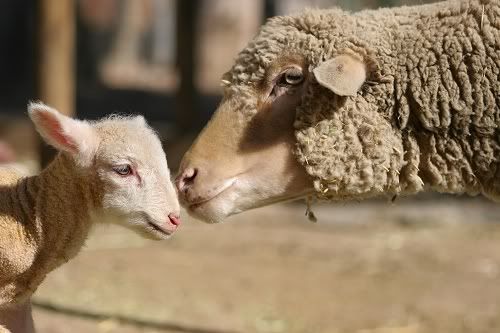
This was taken almost a year ago. Lenny is on the left, a small, week-old lamb seeking and finding solace with his wise, old mother, Virginia. She had spent years on a wool farm, then her fleece quality declined and, well, her "service" was honored with a trip to an unsavory feedlot that slaughtered the animals on-site. We didn't know she was pregnant, she was so emaciated. And then! A small form, a little life trailing behind his mother on the hillside. Beautiful opportunity for us, so used to seeing animals deprived of maternal contact, to see that most sacred and wonderful of bonds.

This afternoon, I noticed Lenny calling and calling. His head was down, he seemed agitated. Ah, then he found her. His mother. He's almost a year old and mostly spends time with a few other sheep, but ever so often he has these moments of panic. Must find mother! And then they are connected once again, hearkening back to these early moments of bonding, sniffing, touching. This, this moment right here, it is never ever forgotten. It will be remembered by Lenny and Virginia every day of their lives, and they will seek to reenact it, just to keep the lock on this door primed, well oiled, ready to be opened and seen, smelled, experienced again.

Have a happy weekend. Kiss someone on the nose, will you?

Virginia touching noses with baby

Wool is not as natural as you might think

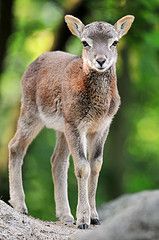
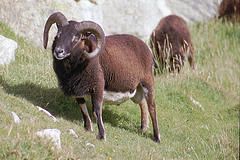
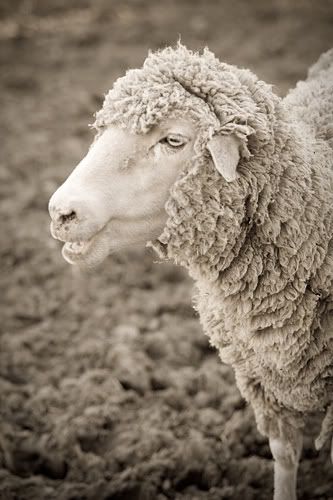
More than 10,000 years ago, the ancestor of domestic sheep did not have wool. Not in the traditional sense, anyways. The mouflon sheep at your right is considered the ancestor of "wool" sheep. Their hair/wool is soft and sheds annually in the spring and summer. The soay sheep (below left) is another example of a wild sheep with the most natural of wool, the kind that doesn't just keep growing.

People could still spin the fiber, it just needed to be collected instead of shorn and there wasn't a lot of it to use. So thus the domestication process began.

It's amazing how so very different domestic sheep are from their wild ancestors. Most breeds have long, wooly tails - wild sheep do not. Sheep tails' are generally docked, sometimes leaving the animals with absolutely no rear-end protection. Wild sheep have hair or shedding wool - domestic sheep, if left unshorn, would die from exhaustion or heat stroke within a couple of years or be burdened with 50+ lbs of extra wool. We took perfectly adaptable creatures and selectively bred for traits that are useless in nature and, even more tragic, deadly for the animals without our intervention. How arrogant of us to make these animals so reliant on humans that, if left to their own devices, would probably become weighed down by wool and die within a few years (months if in arid, desert climates).

The sheep at the sanctuary are a variety of different breeds. Some have reaAidenlly thick wool that you cringe looking at (imagine wearing an extra 20 lbs!) others have less wool to worry about. They are all sheared annually to prevent heat stroke and overgrowth of the wool. We do not tail dock or dehorn the sheep, either. None of the tailed sheep have had problems with blowfly or pooping, either. Trying to keep them as natural as possible is, unfortunately, impossible so we strive to keep them comfortable and happy instead.

So the next time you go shopping, give some thought to what you purchase. Wool is not natural for the sheep, it's uncomfortable and can be deadly. Animals are tail-docked and some have their rear-flaps cut off without pain relief in a process called mulesing. Many are often dehorned and castrated without pain relief. Try other natural alternatives, like cotton or hemp.


Photo Credits:
http://www.flickr.com/photos/tambako/ / CC BY-ND 2.0

FFA versus Lambie

I'm going to be honest, FFA & 4-H animal programs creep me out. Betrayal, lies, misrepresentations are all at the heart of these programs.

Saturday, we welcomed a 5-mos-old Suffolk lamb from a northern California high school FFA program. The student had not been told her lamb would end up at slaughter. Appalled, she sought out the aid of farmers, thinking one would understand this bond, this relationship she formed with the sheep. They didn't, because they could not move beyond the idea of "owner" and "property".

When farmers offered no help, she searched for sanctuaries and found Animal Place. The late-night email said the sheep had until Sunday to find a home. On Saturday, I called up the student and her mom to gather information. The first question I asked was whether the student planned on doing any more animal projects - an emphatic no. After talking with staff, we agreed to bring "Lambie" back to the sanctuary, saving her from the cruel fate of nearly all FFA/4-H animals, slaughter.

There's the betrayal. It stares these children in the face, smiles, wraps its greedy hands around small shoulders and says, this death, this slaughter, this is okay. For months, students have fed, watered, groomed, handled, socialized and, dare I say it, loved these animals. They have gazed into blameless eyes, have nursed sick to health and have been living a lie. When it comes time for the fair, the inevitable auction, children weep for their beloved friends, they cry tears of pain and anger that this animal who they have devoted heart and soul to is slated for death.

Then there is the parental perfidy. Parents see the heartache, know the bond has been formed....and yet. Our society seems to value a cognitive dissonance, a disconnect from empathy and compassion. Parents want their kids to learn responsibility, make connections, but they seem to expect their kids to just "toughen up" and get on with it. Not all parents do this, of course. Lambie's biggest advocate was the student's mother. She refused to acknowledge the teacher's desire to kill Lambie and instead made every effort to follow her daughter's heart.

Schools also play a role. They make deals with local banks to offer loans. These loans pay for the purchase and partial upkeep of the animal. Most students don't have jobs and while creating good credit is a noble thing indeed, the whole concept of a loan sets up the child for failure when s/he wants to save the animal. Now the child has a $2,500 loan to pay off and no money to do so....except the money they get from selling that animal at auction. Some schools purchase the animals outright, maintaining "ownership" rights. Schools tend to be unsupportive of students who want to place their animals in lieu of selling them.

These animal programs are marketed to students as ways to garner "real world experience". In some ways, I guess they do - in the real world, people lie. In other ways, they fail. In the real world, most farmed animals live inside sheds and cages and are slaughtered in high-output processing facilities. Most never see the light of day or roam free. FFA/4-H programs do not emulate how most animals are raised or the scale of production and death. I'm not suggesting they do, either. But there should be duplicity, more honesty.

Little Lambie is lucky. We will place her in an appropriate home or keep her indefinitely at the sanctuary.

We think all children should spend some time with farmed animals, just not in the confines of a farm. Find a sanctuary in your area and encourage kids to visit and, age requirements permitting, volunteer. This is a much better way to learn responsibility and, more importantly, compassion and empathy.

And if you are feeling especially giving after reading this post (and of course you are), please consider a donation to Animal Place so that we may continue doing our life saving work. If you cannot make a monetary donation, check out Willy's wishlist.

Sanctuary Notes: Etta and Me

Etta was rescued from a live-market slaughterhouse a year ago. She arrived sick, emaciated and afraid of people. During the first months, she needed extensive medical care to help her gain weight and clear all infections. Her true personality emerged, and she is now a very outgoing sheep with a personality that steals hearts, including mine.

Etta had been favoring her right back leg for about a week. We worried she might have an abscess in her hoof or arthritis. We made an appointment with the vets for radiographs and an ultrasound at UC Davis. Getting her into the stock trailer was easy – she just followed me up the ramp. Once we closed the doors behind her and lifted the ramp, she started to worry and bellow loudly. I reached my hand through the trailer, touched her nose, and spoke quietly to her.

I parked the truck and stock trailer while Etta’s deep call echoed across the hospital parking lot. She quieted down when I peeked over the edge of the trailer, let her sniff my hand, and told her to stay for just a bit while I checked in. Her calling resumed instantly as I walked past the line of horse trailers towards the entrance. A woman brushing her horse’s mane and tail looked at me then back at my trailer and smiled, “your sheep sure does miss you”.

“She is my favorite lady,” I smiled back.

I unloaded Etta and waited for the students and the vet to arrive. Etta was nervous; her pupils were dilated and her breaths short, but she was quiet. She stood next to me and leaned heavily into my leg while I scratched her back. The vet was running late, so I left Etta in the room to grab some work from the truck. I ran into another vet who has treated Etta numerous times and knows the animals by name. Shouting over Etta’s nervous calls she said, “Etta really loves you.” I smiled, gave her the short version of why we were visiting and returned to our room. Etta was waiting by the door and re-glued herself to my leg. The staff arrived and gave her a physical. (She was up 40 pounds from her arrival weight! It took all my self-control not give the staff a round of high fives.) They wanted to assess Etta’s walk, but she was nervous and tried to dart away from them. So she and I made a tightly linked train (I the engine and she the caboose) circling the perimeter of the room clockwise then counter-clockwise for quite a few rounds.

The vet left to grab supplies from the pharmacy and the vet tech stayed to chat. He kept his eyes on Etta as he told me about his family’s beef cattle ranch near our new property in Grass Valley. I invited him to visit after we move. I noticed a connection when he said, kind of surprised, “she is really bonded to you.” The vet returned with Etta’s diagnosis: her arthritis is worsening probably related to her previously difficult life. Not much could be done except to provide pain management.

It hit me that maybe my bond with Etta wasn’t completely one sided, and that maybe she actually got something out of being around me, too. It never fails to excite me seeing how profound an impact the animals and their behaviors have and how apparent their emotions can be to people. I hope you have time this summer to attend one of our tours and spend time at the sanctuary. You’ll be amazed at the bonds the animals have with one another and the bonds they will form with you.

Animal Spotlight: Virginia & Lenny

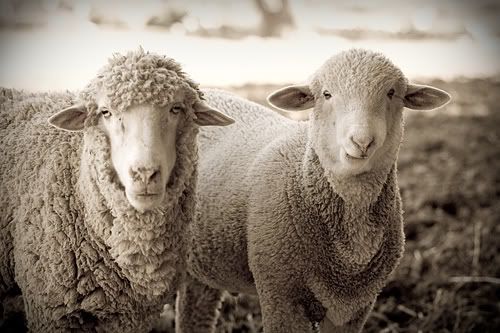
It was hard to pick just one of these photos, so here are all three. They look like sheep with a message across the ages, maybe one of hope or kindness. Probably "more apples, please".


Virginia and Lenny are two special sheep. Virginia was rescued from a live-market slaughterhouse. She arrived skinny and with crackling, sickly lungs. At one point, she was in renal failure and we were almost certain she didn't have long to live. On a warm evening, this petite ewe gave birth to one big, healthy lamb. Even the vets were shocked - they had no clue she would be pregnant!


Having a baby transformed Virginia from a sickly, shy ewe to a relatively healthy, protective mom. Her health improved dramatically, even though Lenny proved to be quite the energy suck. Their bond is incredibly strong and we know Lenny will grow up to be as beautiful, gentle and probably as shy, as his mom.


Scratch my back Etta

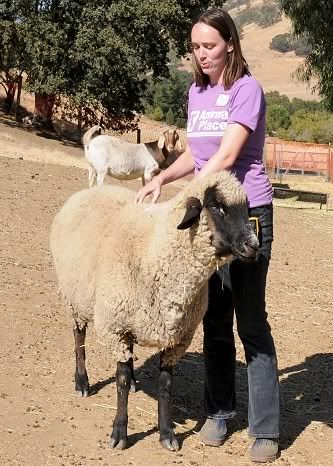
This is Etta. And me (I'm wearing purple). Our best guess of Etta's age is around eight or nine. In sheep years, that is reaching the esteemed period of Ancient. Five months ago, Etta arrived with seven other animals from a slaughterhouse. She was skinny and nervous, avoiding people at all costs. Who could blame her?

Etta earned her name through what we call "Better Living Through Singing". Etta has a deep, resonating R&B style voice that booms across the sanctuary. We like to think that her namesake, Etta James, would appreciate Etta the sheep's lyrical style and would be honored. Or offended, since Etta the sheep cannot hold a tune and really only has one song to sing called "MEEEHHHHHHH". It's a catchy tune, really.

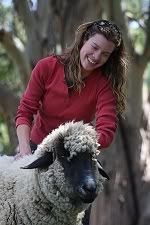
After Etta opened up her voice pipes, she also discovered a burning desire for back massages. Etta may not be queen of R&B but she is empress of R&R. There is no sheep who loves a back rub like Etta. When you enter her enclosure, she'll stand at attention, gaze intently at you, sing her song "MEEEEHHHHH" and amble over. If you do not immediately offer up your hands for a massage, she will lean into you, ram her head ever so gently into your stomach and sing for you "MEEEEEHHHHHH". Sometimes she gets right in your face and stares really hard, trying to convey the obvious - where's my back rub? Who can resist such charm? As the picture shows, not me.

Why did this lyrical genius end up at a slaughterhouse? It is hard for me to understand. I cannot imagine cooking her up and eating her - she is a being unto herself, full of her own sheep thoughts and sheep feelings, wanting to do her own sheep things. How could I deny her that for something I don't need, like her flesh? And even if I liked the warmth of her wool, there is nothing natural about it nor do I need it to survive. Etta's ancestors and her wild brethren have hair - it keeps them warm in the winter and naturally sheds in the summer, allowing the animal to remain cool. Humans bred domestic sheep to have constantly growing wool. It must be sheared to keep from growing and growing and growing. When that wool (or its lanolin) stops being useful for scarves (or lanolin-related pursuits), the sheep stops being useful to the farmer. Not a very healthy relationship for the sheep.

Etta doesn't opine on these matters, unless they relate to whether the neck massage takes precedence over the lower back shiatsu (they generally don't). She lives in the here and now and perhaps the "where is my back rub?" future. There is nothing to remember and nothing to forgive because all that is good is now, here in this moment of physical bliss. I can't help but enjoy the moment too, even if Etta doesn't return the favor of a back rub.

-Marji Beach, Education Coordinator

Virginia has a baby!


Rescued from a slaughterhouse four months ago, skinny and malnourished, we never thought Virginia was pregnant. Imagine our surprise when she gave birth to a beautiful baby boy!

Virginia is a stellar mom. She responds immediately when little boy calls for her. Checking in every few minutes, she gives him gentle baths and makes sure he stays clean. It's funny to watch him look up to his mom, almost as if saying "What next, mom?" Think good thoughts for little boy and his mom - as an older sheep, Virginia isn't in the best of health. She has problems with her lung from previously untreated infections and her liver is failing. Through all of this, she has shown a remarkable will to live and a strong drive to take care of her baby. We'll do our best to keep her comfortable and happy, while also helping her take care of little boy.

Animal Place will continue to provide safe haven and stellar care for any and all animals who enter our barn doors. While we help them, the animals help us to keep hope alive for farmed animals everywhere. You can help by choosing a plant-based diet, by choosing cotton over wool, by being an integral part of the solution.

Adidas - Impossibly Inconsistent

Adidas plans to avoid purchasing wool from Australian producers that mulesing or “clip” the rear flap of skin off of their sheep.

Mulesing is the cutting away of the rear skin flap on wool sheep to prevent flystrike. It is painful, often taking weeks for the animal to recover. No anesthesia or pain relief is required or offered.

It may seem “nice” that Adidas is taking this stance, but they show their true colors by continuing to argue that it is “ethical and humane” to slaughter kangaroos for use in their soccer shoes. The millions of dead kangaroos and their clubbed babies would, if they were alive, probably disagree.

Corporate responsibility should not be so inconsistent – Adidas continues to celebrate cruelty with their use of leather while pretending to care about the suffering of mulesinged sheep.