Showing posts with label factory farming. Show all posts

Country View Farmily Farms - Mercy for Animals investigates


Mercy for Animals has once again given us access to the inner world of farming, and it isn't pretty. Country View Family Farms markets itself as a coalition of family farmers that infuses the local community with $12 million a year and offers a sustainable method of raising animals for their flesh.

An investigation (graphic video) into one of their 100 "family farms" gives a rather disturbing picture of what a "family farm" does to the animals in its care. Stephanie over at Change.org details the investigation and the reality these pigs endure.

I want to touch upon the statement Country View Farms issued that you can read here.

According to spokesperson, Dr. Jessica Clark, who also happens to be a veterinarian (scary),the pigs at this farm were "mishandled" and that the "high quality" of care were less than high at this farm and, wait for it, this was an isolated event.

Really?

Ignoring the bashing of piglets into door frames, the lack of medical treatment, and the improper stunning of a sow, standard operating procedures at this farm include:

Castration without pain relief: There is nothing illegal or uncommon in how the male piglets in the video are castrated. It happens every day on nearly every single farm to the more than 50 million male pigs born into this world. The video shows workers slicing open the scrotum of piglets and ripping out their testicles. Please imagine doing this to a dog or cat and explaining it away as "standard" and "quick" and that the "animals don't feel it for long".

Tail docking: All piglets have their tails sliced off with the same knife. All without pain relief. 

Gestation and farrowing crates: Most of the 10-15 million sows in this country live in stalls so small they cannot turn around. They bite and chew their bars, trying desperately to cope with the trauma of forced confinement.

Tattooing: I am not certain how common tattooing sows without pain relief and with the same unsterilized sharp implements is in the country - it isn't a violation of any law, that is for sure. And the vet probably isn't referring to tattooing as a violation of this company's "high standards" of care.

Gassing piglets to death: This too is normal, though another acceptable method is cervical dislocation or bashing a piglet's head into a concrete floor. That's legal too. Gassing with CO2 is not nice or easy, it is frightening and painful.

Castration without pain relief, gestation crates, tattooing without pain relief and gassing are normal. They are not outliers that occur on isolated farms.

Do not worry, dear readers, all the 100 farms have undergone extensive re-training so that pigs won't be mishandled any more. I mean, they will still castrate pigs without pain-relief, still stab sows with sharp objects to mark them, still gas piglets to death, still house intelligent, social animals in cages so small they cannot turn around. But hey, maybe fewer piglets will be randomly bashed into walls and maybe fewer sows will be left to suffer from their intestines falling out of them. Hard to be reassured, isn't it?


Go vegan.

Controversy over new global warming report


A new Worldwatch report claims 50% of all global emissions of greenhouse gases can be attributed to livestock production.


This article attempts to refute the 2006 report Livestock's Long Shadow which blamed livestock production for 18% of all anthropogenic sources of greenhouse gases.


What is surprising about Worldwatch's report is its suggestion: Stop eating meat. Don't just reduce consumption, change what you eat from meat products to analogs. They essentially suggest that the most meaningful way we can reduce our global greenhouse output is to go vegetarian.


A few caveats deserve to be mentioned. The analysis has not been peer-reviewed; that is, other scientists and experts have not pored over the data and drawn similar conclusions. According to one leading expert on climate change, Tara Garnett, the data is certainly welcome, particularly the information on methane, but that the data on carbon dioxide emissions from livestock breathing may not be accurate. Further, the conclusion drawn from the methane information may be skewed due to lack of equalization across all industries (i.e. the authors did not apply their statistics equally to all methane-producing sectors).

Karl Burkart over at Mother Nature Network offers some criticisms to the report. While there is no doubt Burkart and Animal Place come from two different philosophies, there is fairness in his criticism.

Of course, the ultimate conclusion is still valid - the reduction or elimination of meat, dairy and egg products from our diet is beneficial to us all. It improves our health, reduces our impact on the environment and, obviously, reduces the suffering and exploitation of other animals.

The Stories We Tell Ourselves

Try to imagine any end other than taste for which it would be justifiable to do what we do to farmed animals. - Jonathan Safran Foer, New York Times

I ended up at Foer's New York Times article by way of this editorial which painted Foer's piece as an intensely anti-agricultural essay.


Foer's story probably resonates with many and my guess is that it exemplifies the struggle many vegetarians and vegans go through in their lives. He makes mistakes, consciously chooses a lifestyle that does not mesh with his true ethics and eventually finds himself in a position to create a story of compassion.

This offends the Animal Agricultural Alliance. A lot. So much so that they claim his piece contains some of the most negative stereotypes of modern agriculture. Like ever. Which is odd, because the article itself shies away from describing any actual practices of animal agriculture. De-beaking, gestation /battery/veal crates, castration without pain-relief, maternal deprivation, slaughter etc. ad naseum forever and ever. None of that is mentioned.

The article states a few things about animal agriculture (really, the bulk of the story is an essay on Foer's personal journey to vegetarianism, not about the cruelties inherent to animal agribusiness). In his seven page article, this is what Foer mentions about agriculture:
  • 99% of animals consumed in this country are produced by factory farms.
  • Animal agriculture is the No. 1 contributor to global warming
  • Animal agriculture is No. 2 or No. 3 cause of the most serious environmental problems (air/water pollution, deforestation, loss of biodiversity)
That's it. In an article that is more than 3,500 words long, Foer devotes a paltry number to "facts" about animal agriculture. This isn't a treatise on the horrors of farming, by any stretch. It is a story shared with others, a personal testimony on why the author is vegetarian.

But let's look at the Animal Agricultural Alliance's concerns (first you must get past the initial ad hominem attack and attempt at discrediting Foer all together):
"Just as with Michael Pollan, an agricultural background is notably missing."
Having an agricultural background has little bearing on the ethics of raising animals for consumption. Arguably, *I* have an agricultural background, having worked on farms, milked cows, witnessed the slaughter of farmed animals, been taught by producers and received my education from one of the largest agricultural universities in the country. How would that qualify my opinion as inherently more valid than Foer's? There are beliefs people hold that have little to do with their educational background or personal experience. And there are facts, irrefutable in their starkness, that are available to anyone with a computer or access to a library - no agricultural background needed to access the database of the National Agricultural Statistics Service or the studies showing the problems with farming (both to the animals and to the environment). There are certainly gray areas and it is fair to point them out, to question the supposition and seek more evidence. None of that requires 50 years working at a poultry plant or 25 years slaughtering cattle.
"It's easy to slap a label on farms if you have never seen one with your own eyes."
Last time I checked, Foster Farms isn't inviting folks into their poultry sheds. Butterball isn't opening up their doors to their turkey barns. Smithfield does not welcome people into their sow sheds. Moark, Inc. isn't holding daily tours of their egg-laying farms. Harris Ranch, with its 60,000 head of "beef" cattle surrounds its facility with barbed wire fencing and attempts to arrest people who try to photograph the feedlot from the adjacent highway. The farms where most animals raised for consumption (meat, milk, eggs) live are not open to the public. The farms that are open to the public, those small family-run operations where animals have better living conditions, are not reflective of how most farmed animals are kept.

Besides, one does not need to see a poultry shed to be discomfitted by the idea of 50,000 chickens living in one shed or 150,000 hens confined in cages in one building. Pictures suffice and those pictures tell a story. The horror of that story is only painfully enhanced when people set foot on the typical egg farm or "broiler" facility. The sounds and scent stay with you.

The Alliance makes a fallacious supposition - that in order to label something as wrong or unethical, we need to experience that something. (In which case, I propose farmers spend a week living the life of the animals in their care).
There are nine states with anti-corporate farming laws, but six of them still rank in the top 10 for hog inventory. Actions taken against corporate farming haven't affected the number or size of farms in those states because family farms make up 98 percent of all farms in the U.S.
 There are several things erroneous with this statement.

First is the claim that Foer was talking about farms when he stated that "99% percent of the animals eaten in this country" are from factory farms. In fact, he was talking about the animals, not the farms themselves. A family farm is not defined by size - if I owned three broiler sheds with 50,000 birds per shed and I was the sole owner and my parents were the only shareholders, I am running a family farm. Fascinating! So even if 98% of all farms in this country are "family farms", the information is not only useless, it isn't the information Foer was discussing.

Second, the Alliance mentions the anti-corporate statutes found in nine states: Oklahoma, Nebraska, South Dakota, North Dakota, Wisconsin, Minnesota, Kansas, Missouri, and Iowa. It's true, six are in the top ten (with the other three 11, 18 and 28th for hog inventory). Information is missing. Oklahoma, for example, exempts all livestock production from its anti-corporate statues. Minnesota exempts poultry producers. South Dakota's law, one of the stringest of the nine states, was ruled unconstiutional and is no longer enforced (the original anti-corporate law had many loopholes permitting corporate farms). All states have had mixed results with the number of farms increasing or decreasing, depending on class size. And the rules all define farms differently. For example, there is a "family-owned" farm in California that runs two egg-laying operations. One farm has 450,000 hens, the other 700,000. These two farms would be legal in all nine states with anti-corporate laws because it is a "family-run" operation with a small number of shareholders and only family members running the operation. It is fair to state that the definition, legally, of what constitutes a "family farm" is a far cry from the bucolic, small pastured-operations most people imagine. 


Or look at Iowa. There are about 8,300 pig farms in Iowa with 20 million pigs.
  • 15.4 million pigs live on 2,700 farms confining more than 2,000 pigs per farm.
  • 3.7 million pigs live on 2,500 farms with 500-1,999 pigs per farm.
  • 1 million pigs live on 3,100 farms that house 1-499 pigs per farm (of which 128,000 live on what most would consider a small farm of less than a 100 pigs).
Remember, family farm does not mean small. Any one of those 5,000+ pig operations could be a family farm.


And in Iowa's case, we have 77% of all pigs being raised on factory farms. If you define a factory farm as any farm with more than 500 pigs, that number jumps to 95.5% of pig flesh coming from factory farms (close to the number Foer suggested). 


The 99% number may not be accurate. But it does stem from the reality that 91% of animals killed in this country are chickens. The only profitable method of raising chickens commercially for sale in grocery stores or fast food restaurants is to confine tens of thousands of birds inside sheds and slaughter them at a young age. So it is a safe bet that 91% of animals consumed come from large farms (the chicken industry is vertically integrated with corporations owning hatcheries, the chickens, the feed and also running the processing plants. Farmers who contract with the large chicken companies may own the land, but they do not own the chickens or the chickens feed.) When you add in turkey operations, pig production facilities and the cattle feedlots, that percentage is certainly going to increase. It may be 95% and it may be 99%. It is not less than 91%, if you consider chickens alone.
Foer writes that modern farms are miserable for the environment, farmers, public health, biodiversity, rural communities, global poverty, and so on. There are many facts that help disprove this unfounded statement. For example, of the top ten pork-producing states, three are ranked in the top 10 with the lowest poverty rates. ᅠᅠ
And the Alliance is here to provide a fact for you! If I learned anything from my college statistics professors it was this: Correlation does not automatically mean causation. If I stomp my foot seconds before a hillside at the sanctuary tumbles to the earth, I do not say that my foot stomping caused the hillside to collapse (there are more likely reasons). The same is true of pork production. If I live in a pork producing state that also happens to have a low poverty rate, I don't look at those two statistics and decide raising pigs reduces poverty. Correlation does not mean causation. Being a high pork producing state does not mean your state has a low poverty rate. It's amusing in a strange way that the Alliance is touting this as fact.
Before pinning agriculture with the brunt of environmental criticism, look first to our own human waste disposal system.
Seriously? Now, I don't want to make any claims regarding the efficacy of our human waste disposal system, but it is mind-boggling that the Alliance would dare bring this up. We have an actual disposal system - human waste has to be processed and properly disposed of. There are few laws that protect our waterways from the waste produced by livestock. Farmers spray it on crops people eat, store it in lagoons that can overflow during floods and leech into groundwater, and the single primary factor for the large dead zone in the Gulf of Mexico is agricultural run off from the Mississippi river. That is poop, people, and it ain't human. Ultimately, it comes down to this fact: There are ten billion land animals residing on farms in this country - to argue that human waste run-off is more likely to pollute or more deadly than livestock run-off from cropland irrigated with manure or lagoons is ludicrous, at best.
The moral decision to eat meat shouldn't be based on such irrational and emotional arguments but on the science that ensures that farm animals receive the best care possible throughout their lives.
This is a sinister argument that undercuts the valid emotional response to suffering. 


And science. Oh, science. How it is lauded and praised and our puny, personal feelings are maligned!What has science taught us about farmed animals? They feel pain - check. They can suffer emotional trauma - check. They can learn in similar ways as humans - checks. They have social preferences - check. They experience a flood of hormones similar to ones experienced by humans who are happy - check. They remember past events and modify their behavior for the present and future - check. They form bonds (evidenced as preferential treatment) with members of their own species and members of other species - check. They avoid harmful stimuli, including humans who have hurt them and seek out positive stimuli, including humans who have been kind to them - check. Their young exhibit stunted growth and abnormal behavior when deprived of maternal or appropriate social interaction at sensitive growth periods - check. They have difficulty learning and growing when overly stressed - check.

All these things that science has taught us about farmed animals points to a diverse, enriching life that is mutilated, minimized, oppressed, castrated, torn asunder in every meaningful way on a farm. They are physically traumatized through castration, dehorning, detoeing, debeaking, tail docking, ear notching, branding all without pain relief. They are denied social bonds through crates and cages and stalls. They either do not know their mothers, as on poultry and dairy farms, or their contact with their mother is significantly reduced, like on pig farms. Only lambs and calves raised for beef spend time with their mothers and several behavioral studies show that when separation after weaning occurs, both mother and offspring exhibit stress behaviors; pacing, crying, inappetance, disinterest in normal social interactions.

Let's conclude with a quote from Foer's piece:

To acknowledge that these things matter is not sentimental. It is a confrontation with the facts about animals and ourselves. We know these things matter.

On Michigan's animal welfare reforms

Michigan Governor Jennifer Granholm signed into law a bill that provides more room to protected species. In Michigan's case, defined species include pregnant sows, calves used for veal, hens producing eggs, turkeys, ducks, geese or guinea fowl. Producers have three years to provide enough room for calves in the veal industry to stand up, turn around, lie down and stretch their limbs. They have ten years to provide the same basic freedom of movement to the other protected species. Michigan has 10 million hens used to produce eggs, 100,000 sows used to produce pigs for consumption and, according to the National Agricultural Statistics Service slaughters approximately 20,000 veal calves annually.
"Agribusiness would never be able to put up the kind of
money for a successful ballot campaign like [the Humane Society of the United States] can," said Michigan state Rep. Mike Simpson (D., Jackson), chairman of the House Agriculture Committee and the bill's sponsor.
This is breaking news, people. Agribusiness is so poor they cannot compete with a $200 million dollar animal welfare charity. For example, the veal industry is practically on welfare with their $1.5 billion income. And according to the USDA's Agricultural Statistics Board, the value of egg production in the United States was $8.23 billion and turkey production $4.48 billion. Chicken production is around $28 billion. In Michigan alone, the value of egg production is $211,000,000. The production of pig flesh garnered producers $16 billion in gross income in 2008. In Michigan, the gross income for pig producers was about $255 million. None of these companies can pull together to fund a response to a ballot initiative?

Is Rep. Mike Simpson seriously proposing that multi-billion dollar industries cannot financially compete with one animal welfare organization?

Let us all be honest. Animal agriculture makes a hefty profit off of the exploitation and abuse of animals (both human and nonhuman). They can well afford to fight legislation and they can well afford to advertise extensively (as evidenced by the plethora of meat/dairy/egg based ads I'm exposed to when I have the misfortune of watching cable television with commercials).


In the end, while Michigan's law improves the living conditions of these animals, it does not improve their lives. From day one, they are treated as commodities without moral value. It does not matter if they are hens in the egg-laying industry or male calves on a dairy farm - the end result for them is all the same, slaughter at a young age.


Of course we support these laws and oppose the efforts of agribusiness to make it harder for welfare improvement to occur (as is the developing case in Ohio). We do not, however, think these are laws that benefit animals the most. Animals will still be slaughtered for consumption. Hens will still be debeaked, piglets still castrated without pain relief, sows still deprived of normal maternal bonding with her offspring. Their lives will still be miserable and their deaths still frightening and mind-numbing. Until we stop consuming animals (or their milk and eggs), these welfare laws are only improving animals' conditions of oppression, not releasing them from unwilling servitude as purveyors of flesh, milk or eggs.

Number of Animals Killed to Produce One Million Calories

Animal Visuals, maintained by Mark Middleton, creates powerful visual graphics to help all of us better understand the world nonhuman animals on farms endure.

People are such visual creatures, a species of doubting Thomas' that must apparently see proof to believe the truth.

Some have argued, often with a serious expression, that vegans manage to kill more animals (or similar number of animals) because of crop harvesting and tilling that kills wildlife. Their argument follows that veganism is not as compassionate a diet as once implied and perhaps, we should just eat pigs and cows and be done with it. Certainly anyone who is vegan for ethical reasons would find that logic a bit unsound. (Admittedly, I laughed when it was seriously suggested, which I guess is generally frowned upon when the person is sitting right in front of you arguing their point in earnest).

Anyway, Animal Visuals took on the large task of ascertaining whether this argument was true. Did vegans contribute to more suffering because of the wildlife who certainly do die during the harvesting of crops? Should we just eat meat, eggs and drink milk because it harms the wildlife and environment less? Balderdash!

Using as much information as is currently accessible regarding estimated number of animals killed during the harvesting of crops for human consumption and the number of animals killed for human consumption (along with the secondary killing of animals during the harvesting of crops to feed livestock), Animal Visuals created a graph of the number of animals killed to produce one million calories.

See for yourself:


As you can see, the number of animals killed during the harvesting of crops is highest on land used to feed "beef" cattle, followed by chickens in the meat industry, pigs in the pork industry, hens in the egg-industry, dairy cows in the milk industry. At the end of the pack is vegetables, grains and fruits raised for human consumption.

When you add in the slaughter of the cattle, pigs and chickens, the disparity becomes even more glaring. To produce one million usable calories to maintain a standard american diet nearly 400 million cattle, pigs, egg-laying hens, chickens, and wildlife must die. To produce one million usable calories to sustain a vegan diet 5.93 million wild animals die.


To be certain, it is tragic that nearly 6 million wild animals die during the harvesting of grains, vegetables and fruit. There is no question that those deaths are sad and heart-breaking, as much as it is sad and heart-breaking for a piglet, lamb or chicken to die for human consumption.

But there is also no question that the magnitude of death is fantastically larger if we are discussing animal agriculture than if we are discussing the crops needed to sustain a vegan's diet. Sixty-seven times larger, to be precise. That is, on an omnivorous diet, you are creating a market for 67 times more dead animals than if you selected a vegan diet. And since this study did not include turkeys, that number can only be larger (270 million are slaughtered annually, raised similarly to chickens and fed more than chickens).

I think we can put to rest the inane notion that a vegan diet somehow contributes to more death and suffering than a diet that is results in the death of 10 billion animals for consumption and an additional 65 million during the harvesting of the crops fed to those animals.

We can do better. We must do better. And the easiest way to do better is to transition to veganism. Purity, in the sense that no sentient being is harmed, is an impossibility in almost any society. That should not stop all of us from significantly reducing the negative and harmful impact we have upon other species.

Meatpacking: "The Speed Kills You"


Every day I think of them, the nameless billions who face death in fear. Ten billion every year in this country, 320 every second of every day. It's unfathomable, really.

Animal agriculture exploits all animals. The most obvious are the ones butchered for human consumption - the cattle, pigs, sheep, chickens, turkeys, goats, ducks. And if producers are willing to tear asunder the bonds between mother and child (on dairy farms and swine facilities), reduce sentient beings to production units, marvel at marbling and prime cuts, it is unsurprising they would treat humans that way as well. The exploitation committed by multi-billion dollar corporations knows no bounds.

Obviously we focus on the animals, because the amount of cruelty perpetrated against them is monumental. But we care about humans as well, which is why we promote veganism - it is a diet of compassion and kindness for all life, people included.

Recently, Nebraska Appleseed published a document called "The Speed Kills You - The Voice of Nebraska's Meatpacking Workers". Nebraska Appleseed conducted an interview of 455 meatpacking employees from five communities within the state of Nebraska.

Here's some of what they found:

Processing lines are too fast
Think about this for a moment: Your job is to make upwards of 20,000 - twenty thousand - cutting motions during your shift. I remember playing tennis as a child. Swinging the racket was tiresome, an hour session of practice left me sore and uncomfortable for days. Even when my skills improved, there were still days when my elbow and shoulder felt strained and sensitive. Doing something similar for 8-12 hours a day is not just unappealing, it's unhealthy. All those cutting motions lead to tendon and nerve damage, causing musculature disorders that are debilitating and often irreversible.
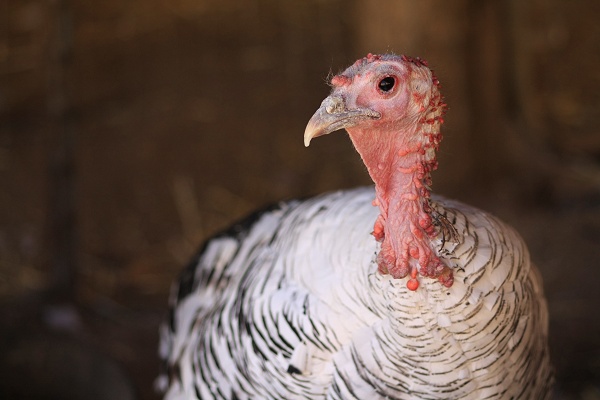

This is unsurprising when you consider the slaughterhouse and its assembly of whole animals hacked into component parts. For example, at Tyson Food Inc's slaughter plant in Kansas, 5,700 cattle are killed daily. In an Alabama slaughterhouse, 100,000 "broiler" chickens are killed daily. Do the math. That is an enormous number of animals killed daily, nay hourly. The gruesome image of mutilated animals aside, having to cut up the bodies is dangerous in the short term (acute injuries) and in the long term (chronic, prolonged disorders) for the workers.

In the report, 73% of workers stated that the assembly line speed had increased since the last year (2006-2007) and 94% said that the number of staff remained the same or decreased. In this country, the Occupational Safety and Health Administration (OSHA) does not regulate line speed, even though they are the oversight organization for implementing protocols and rules governing worker safety.

Working in a processing plant is dangerous

This goes without saying, really. Employees are dealing with animals uninterested in dying (some of them are very large), their dead bodies, and all the sharp and dangerous equipment used to butcher. Half of survey respondants stated that safety standards had declined in the past year. The meatpacking industry has one of the highest rates of turnover in all professions - more than 100%. It seems few people can endure the long-term stress and horror of the processing facility.


In 2008, the Charlotte Observer published a good investigative report on the slaughterhouse industry called the Cruelest Cuts. The journalists found that poultry plants often mask injuries or under-report them. For example, a House of Raeford processing plant in South Carolina claimed to have no injuries within a 5-yr period, a statistical improbability, according to experts. Poultry plants underreport the types of injuries, especially those that are chronic, like carpal tunnel syndrome or other musculo-skeletal disorders. While poultry producers claim a ten year reduction in injuries, both the Nebraska study and the investigation done by the Charlotte Observer paint a different picture. Not only are some injuries crossed out of the injury log, but employers are only required to report the most significant (deadly or disfiguring) injuries to OSHA. The system is set up to fail employees - it's an honor system, with no legal requirement to present injury logs consistently to OSHA or any other oversight committee.

So while industry spokespersons, like those representing the American Meat Institute, use US Bureau of Labor Statistics to claim that reported injuries and illnesses for fell nearly 8 percent in a year, their argument is disingenuous at best. Especially when the statistics are garnered from the injury logs created and monitored by upper management at processing facilities. Fox guarding the henhouse much?

If you cared to know, using the statistics provided by the industry and reported to the Bureau of Labor, you are more likely to be injured working in the toy department of a store than making 20,000 repetitive cuts with a sharp knife in a poultry processing plant. This defies logic.

Processing plant workers live in a culture of fear
91% of meatpacking plant workers are aware they have rights, like the right to medical care, the right to worker's compensation, the right to choosing your own doctor, and the right to unionize. But only 30% felt those rights made any difference. That is, even though they knew they *had* rights (available to them regardless of citizenship status, by the way), it did not matter - their rights would not be honored in any meaningful manner.

For example, take the right to unionize. It's a state and federal right. 2/3 of meatpacking employees in Nebraska do not belong to a union and part of the reason is how the legal right to unionize is presented to them by their bosses. 97% of workers surveyed at a non-unionized plant reported that their employer portrayed unions as incredibly negative, entities wanting to steal their hard-earned money and attempting to put them out of a job. According to one respondent, "If someone wants to talk about the union, they'll call the police."

Or worker's compensation, another legal right that is not contingent upon whether the person in question is a legal citizen or not. Only 44% of employees in the Nebraska plants knew about workers' compensation. 62% of those surveyed experienced an injury in the previous year and 83% reported that injury to a supervisor - 99% were told to just ice it. Because, as you know, icing your completely torn up, damaged tendons and muscles will magically fix the problem. Half of these workers ended up seeing a doctor, while another 14% ended up in the hospital. Only 16% ended up seeing their own doctor or choosing their own doctor. This means they ended up in the hands of meatpacking plant doctors and nurses who may not have had the best interest of their patients in mind. Only 50% of those injured received medical coverage from their employer. If you got injured, you had a 50/50 chance of paying out of pocket for something your employer should, by all rights, be funding. Those who had to stay at work for more than seven days did not receive wage compensation from their employer. That's illegal.

In the Observer's investigation, between 25-75% of all meatpacking plant employees are undocumented. Former employees of a poultry plant stated that they preferred undocumented workers who were more likely to endure oppressive treatment (like not being allowed to use the restroom during their shift, being verbally assaulted, etc) out of fear than documented workers. Animal agribusiness (and other agricultural entities) use this fear to deny medical coverage, encourage longer work shifts, and discourage workers from partaking of their legal right to unionize. No matter where you stand on the immigration debate, it is inexcusable in any modern society to treat people in such substandard ways that they may be disfigured, killed or permanently disabled because of their employment.

Meatpacking is a dirty, disgusting job. It exists because of an over-reliance on meat, dairy and eggs as our primary source of protein and other nutrients. Our desire for inexpensive products produced quickly spells disaster for both nonhumans and humans alike. The tragedy for the animals occurs at day one - their lives are bleak, at best, horrifying at worst. Their end is one more indignity, one more cruel treatment in a litany of abusive injustices. And for the humans who will earn less than $25,000 carving up the billions of bodies, their job is heartbreaking and achingly frustrating. Their undocumented status makes them more likely to take on jobs where they will be denied their basic rights as a human citizen in this country. Their desire to eke out a living means they will work long hours doing jobs most people would quit after an hour. Some become desensitized to the violence in front of them, others become so sensitized they are traumatized for years.


I wanted to write about this because animal agriculture is hurtful to us all. We deserve to be treated with respect and dignity. None of us, cow or human, should be reduced to parts and "cutting ability". These human workers are as ignored and forgotten as the animals they kill to fill the bellies of people who, if faced with an actual slaughterhouse, would faint from the blood, the horror, the outrage of what we do to these sentient, beautiful creatures. While the workers are not slaughtered by the droves, they are oppressed and mistreated, put into positions where they are injured and disfigured, forced to endure humiliation and verbal/physical assaults. They are part of this cycle of cruelty.

No law can fix this problem. No specially formed committee can stop the violence and oppression. Not when people want cheap food. Not when producers will do whatever they can to increase speed and output. Not when cattle and chickens are seen as commodities and their slaughterers as tools of the trade.


Fixing the problem is easy to say, harder to implement on a global scale. But I'll go ahead and say it: Stop being part of the oppression and cruelty. Stop eating meat. Stop drinking milk. Stop eating eggs. Choose a plant-based diet and a vegan lifestyle. And do so in a way that honors fairly the workers who harvest your fruits and vegetables as well. You can only win by transitioning over to a vegan diet and you'll be making a statement that how animals - human and nonhuman - are perceived matters to you. That you don't just care, you go beyond the words and rhetoric and into action - you're doing something.

On sows and piglets


Last week, I blogged a bit on the dairy industry and now I'd like to turn to the pig industry.

The first time I met a pig, she was in a farrowing crate inside a temperature controlled room. It was clean and sterile (we had to wear scrubs and boots to enter). There were six sows surrounded by piglets. She could not turn around.

And it was silent. You could have dropped a pin and heard it reverberate off the cement floor.

Sound would fill the room during feeding time, when sows would grunt the "come eat" call. And painful cries would erupt during the piglet processing time, when 2-3 day old babies were unceremoniously castrated, tail docked and ear notched without pain relief. Then the room was deafening.

But usually, it was quiet.

I know that does not sound like a provocative statement, but pigs are talkers. Their world is smells and vocalizations. When I started working at Animal Place, I learned pig talk secretly. I say secretly because the first time you try to grunt like a pig, it's an embarrassing sound and, well, I didn't want to offend my boss who could "talk down" a charging, wild boar. None of the pigs took exception to my fumbling attempts at communication, some even seemed to grunt soft exhalations of encouragement. In those moments, when my ears were filled with the sounds of porcine conversation, my heart ached at how ignorant I had been in that room of silent pigs.

The silence is a sign of an animal defeated, a sow who would normally spend her days talking, speaking, thrilling in the soft sighs of contentment, the growls of anger, and all that it means to be a pig. She would lie in deep-beds of leaves or straw, never choosing hard dirt over soft comfort. When she gave birth, it would be in a nest of her choosing, far from the group, in a safe place of her making. Pigs are normally showy, gregarious animals but birthing is a secret affair, a special time for a sow to be alone with her young. She cannot do that in a crate. And the conversations sows and piglets have! They are wonderful, full of meaning, delightful and perfect. Every touch, every soft grunt, all of it is a lesson on how to be porcine, how to be a pig.

I remember touching one of the sows in those crates. She was red and big with fourteen piglets tussling off to the side. She flinched. I could feel a strange sense of horror deep inside me, but I pushed it down. I rested my hand on her back and, for one brief moment, she leaned into it and then jerked away, as if burned. She could not understand my sudden interest in touching her with gentleness, no pig in the pork industry does.

Anyone who can explain the rightness of a cage has never been in one, never felt the sides of it pushing and denying access to the natural world. They have not felt the frustration of nothingness, of being restricted, of being in a barren, empty world. When her instinct drives her to make a nest for her babies, she cannot. When her preference would be to nurse her piglets in a deep bed of leaves, she cannot. When she wants to run away from the humans who abuse her, she cannot. When she wants to burrow in straw with her sister and brother, she cannot. And when she is desperate to save her piglets, when they are taken forcibly from her at 2-3 weeks of age, when the wrongness of that separation is evident in her tense muscles and strange cries, she can do nothing to stop it. Everything done to her is an attempt at removing her from instinct and desire and what she wants and needs.

We know what happens to her piglets. They too will be stripped of their dignity and of their pigness. Then they will be killed and eaten by a species who does not need meat to survive. She will spend years in that cage, repeatedly artificially inseminated, repeatedly denied access to a nest and the outdoor world, repeatedly abused and repeatedly stripped of her babies.

I don't need meat to survive. You don't either. Pigs need to be allowed to express all that makes them them. And they cannot do that on a farm or in a place that sees them as roasters and production units. Since there are so many alternatives to pork, there isn't any reason to start choosing a compassionate diet now. Do it today, for the millions of sows denied true motherhood and the hundred million piglets turned into pork. We must honor who they are by not reducing them to what our palates desire.

Agriprocessor's Inc

Agriprocessor's Inc is charged with more than 9,000 misdemeanors for hiring 32 children at their "kosher" processing plant in Postville, Iowa. In May of this year, the plant was raided and 400 workers were arrested, accused of being "undocumented immigrants". That is nearly 60% of Agriprocessor's workforce (they are now hiring homeless people from Texas to fill the void). Postville has a population of about 2,300 - nearly 18% of their entire population was detained and arrested.

While 2/3 of the animals at Agriprocessor's are slaughtered conventionally, with a captive bolt gun to the head and then bled, a 1/3 of the animals are killed using the traditional practices of shechita. While a little more complex, the ritual slaughter involves restraining a conscious animal and cutting their throat, severing the eosophagus and trachea. No stunning is permitted. In 2004, PETA released video footage showing improper shechita and cruel treatment of cattle being killed. Federal inspectors were caught sleeping and playing card games on the job, not properly inspecting contaminated carcasses and generally not doing their job. While animal cruelty charges were considered, no case was filed. The USDA suspended one inspector and sent warning letters to two others. No ice cream with your pie for you, you crazy inspector-kids you!

Meatpacking plants are dangerous. They have a 100% turnover rate. Life on the processing line is unsafe, with a high rate of accidents and injuries. Workers are denied medical care, overtime pay and sick time. Some spend 50-70 hours a week enduring back-breaking labor and killing sentient, feeling beings. Meatpacking plants are founded on cruelty; their human employees aren't exempt from callous treatment.

Intensive farming is a destructive force. It ruins rural communities. It degrades human workers to objects. And it murder billions of feeling, sentient animals for no other reason than to placate a stomach's growl. Stopping the maelstrom is as simple as making compassionate food choices. Don't support an industry that abuses its workers, destroys the environment and reduces intelligent animals to body parts and "prime" cuts. That is the only way to stop the existence of the Agriprocessor's of the world.

When CAFOs attack!

In flooded Missouri, Governor Matt Blunt decided that industrial farms with manure "lagoons" (aka shit-pools) could bypass the minimal environmental laws and saturate wet fields with mushy-feces. Yum! Tomatoes anyone?

No doubt this will help make 2008 The Year of the Dead Zone.

A factory farm near you...

A new website from advocate group Food & Water Watch shows us where factory farms are located along with the most polluting states for each industry. It also shows number of animals in each state for each industry. You can go further in detail by clicking on the number of sites or animals by county! This is a great educational tool.

Visit: http://www.factoryfarmmap.org/

From the website, we learn:

Cattle
Nebraska (644 sites) and Iowa (552 sites) are most polluting based on site/farm number
Texas (2.6 million cattle), Kansas (2.2 million cattle), and Nebraska (2.1 million cattle) are most polluting based on number of animals.

Pigs
Iowa leads the states with most number of sites (3,876) and number of animals (13.3 million pigs). As an aside, Iowa has a population of 3 million - that's four pigs per person in Iowa.
In a distant second is North Carolina (human population 8.8 million) with 9.8 million pigs.

Dairy
California is the number one most-polluting dairy state with 1.4 million dairy cows and 1,075 dairy farms.
No other state matches California with number of animals or number of farms: Wisconsin is a distant second with 189 farms and Idaho has 318,000 dairy cows.

Broilers/Chicken raised for their flesh
Georgia houses and raises 148 million baby birds (meat birds are killed at 6 weeks of age), Alabama is second with 99 million baby birds.

Even more shocking is the number of sites - Georgia has less than a 1,000 sites for 148 million birds. That's an average of 154,000 birds per site.

Egg-laying hens
Iowa, Ohio, California and Indiana all have more than 20 million egg-laying hens. Iowa, with 33 million birds has approximately 46 sites - that's a whopping 700,000 birds per site.
Pennsylvania houses 15 million birds on 75 sites. That means, on average, each farm is housing (indoors in battery cages) 200,000 birds.