Showing posts with label rescue ranch. Show all posts
Showing posts with label rescue ranch. Show all posts
Check Out Rescued Hens
Rescue Ranch is our most innovative program - there are literally no others of its kind in the country! We work to facilitate the release of "spent" hens from egg farms and assist local animal controls with cruelty or neglect cases involving farmed animals.
The animals we take in are rehabilitated and then rehomed! In 2011 alone, we've been able to save the lives of 2,000 chickens, 19 turkeys, 3 sheep and five pigs!
Here is a video of 225 hens recently rescued and up for adoption.


Hens Available for Adoption

Last month, 200 hens arrived safe and sound from a small egg farm. They are the very first residents of Animal Place's Rescue Ranch, a 60-acre farmed animal adoption and placement center located on the former site of the Animal Place sanctuary.
The hens arrived with leg trauma. When they were young, the farm manager attempted a new identification system- plastic-coated, wire leg bands. Unfortunately, while the legs of the hens grew, the bands did not. More than 90% of the hens had deeply embedded leg bands, some to the bone.
It has taken almost two weeks of intensive care for the first group of birds to be ready for placement.
The manager will not be using these identification bands anymore.
We are placing the hens into permanent homes. Check out the adoption information below.
How to Adopt Hens
These hens are all commercial brown layer crosses. They have been bred to produce an amazing 250-300 eggs a year - 5 times more than normal. When their production decreases, they are generally sent to slaughter. They are 1.5 years old and can live another 6-7 years.
All the animals received by Rescue Ranch will be placed into permanent homes. Those who cannot be placed will be sent to the 600-acre sanctuary in Grass Valley, CA.
All of the rescued hens are available for adoption. If you are interested in adopting, please contact Marji Beach at marji@animalplace.org or 530-798-5114. You will be requested to fill out an adoption form and, if approved, pick-up of birds will be arranged. Adoption fees are to be paid upon pick-up of birds. The fees cover the care of the birds and allow us to continue our life-saving work. Any additional donations are greatly appreciated!
The adoption fees are as follows:
1-4 hens: $10/each
5-11 hens: $7/each
12+ hens: $5/each
About the Farms
Animal Place's Rescue Ranch is unique in that we work directly with farmers to provide an alternative to slaughter for a small percentage of hens in the egg laying industry. There are more than 15 million hens raised for eggs in California. Most will never find true sanctuary. The farms we work with range from small, pasture-based operations to larger facilities.
Animal Place is honest - we are a vegan organization promoting compassion to all life. We may never see eye to eye with farmers on some issues, but we hope to find common ground in order to save as many lives as possible. Toward that end, we keep all information about cooperating farmers private, and they reciprocate by not using Rescue Ranch as a tool to promote the consumption of their eggs. We do not bring cameras or recording equipment into the farm and both parties sign confidentiality agreements. Again, Rescue Ranch's goal is save as many lives as possible without compromising the integrity of our organization.
Backyard chicken redux
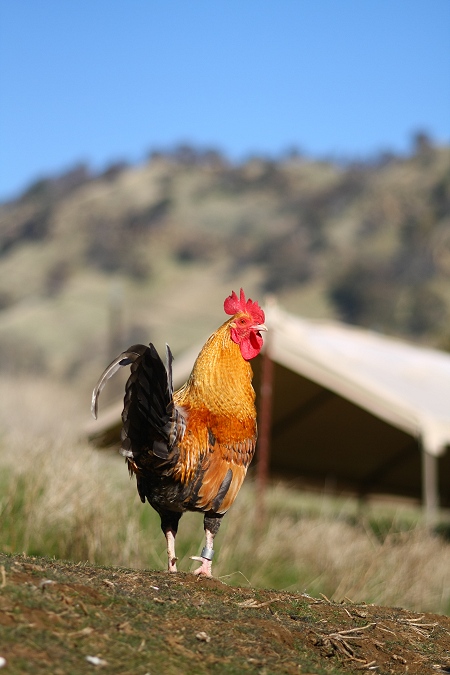
This is something that's been blogged here before. Animal Place currently opposes the creation of ordinances permitting chickens. We support and will promote the adoption of chickens into homes where they are legal.
Back to the blog, a point I'd like to touch upon:
There is an assumption here that chickens people purchase from hatcheries and feed stores are somehow intended for egg farms. They aren't. There are hatcheries that produce hens for the egg-laying industry. A recent example is Hy-Line hatchery, the world's largest producer of hens for the egg industry and embryos for vaccines. They also grind up all male chicks alive, which isn't something hatcheries producing chicks for backyard flocks do - chicken sexing is difficult and roosters make great packing material.But isn't a life in a backyard with a concerned, if novice, family better than being debeaked, forced to molt and jammed into a tiny factory farm cage for your entire existence? And isn't a short life in that backyard better for a rooster than being liquidized in a grinder as a chick?
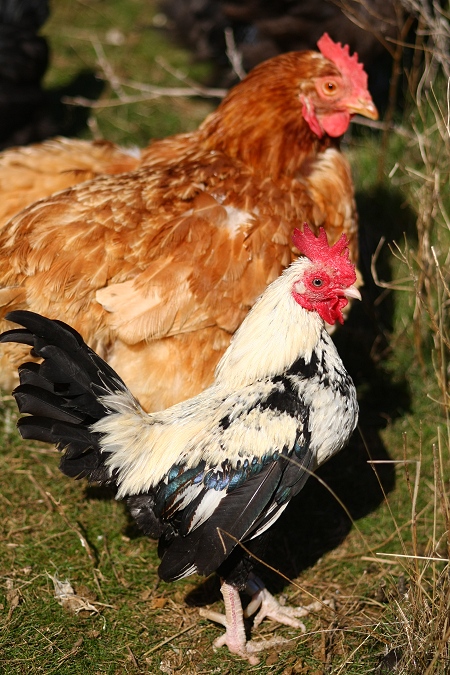
The blog ignores entirely the valid issues the sanctuaries brought up. Nowhere does the author mention that day-old baby animals are shipped through the postal service without food for up to 72-hours legally. The author doesn't mention that hatcheries use roosters as packing material, you know, like bubble wrapper or newspaper, and then those same hatcheries refuse to take back the roosters. The author doesn't mention the increased intake shelters and sanctuaries have seen of unwanted hens and roosters, the difficulty in placing chickens, and the extra burden this places on animal shelters and sanctuaries.
The author doesn't mention that chickens are not uber-easy-throw-out-in-the-backyard pets. Their medical care is expensive. They are carriers of normal chicken diseases that people cringe at hearing - salmonella, coccidia, giardia. They attract rodents and predators, which can be prevented with proper predator proofing and extra care in storing food. The author doesn't mention that chickens are not food, they are unique individuals with interesting personalities. Goodness forbid, they are viewed as companion animals and, as such, be offered the kind of treatment a good guardian would provide to their dog or cat.

But we cannot, in good conscience, support opening the flood-gates for more abused and unwanted birds. Not until the regions where chickens ARE legal show they can significantly reduce the rate of unwanted hens and roosters, ensure birds are not slaughtered in backyards, and where most birds are adopted from organizations like Animal Place and not purchased from hi-volume, puppy-mill style hatcheries. And we certainly cannot support more ordinances when the perception of chickens is as food source and not companion. We want people to like chickens, relate to them as they would a companion dog or cat. We want people to revel in the daily gossip of the chickens. We want people to make that connection, between their companion chicken and the chicken wrapped in plastic at the supermarket - they are one in the same, an animal with unique interests, a drive to live.
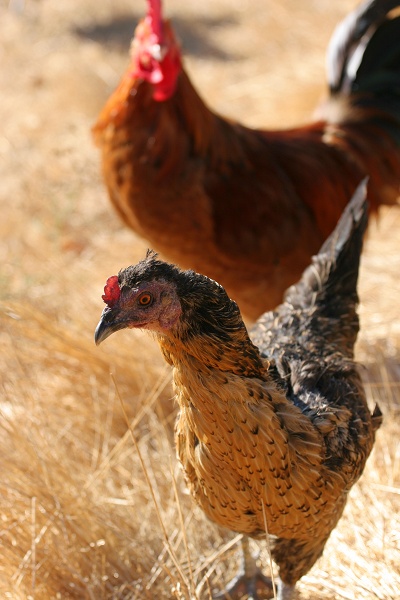
And if you want to be put on a waiting list for incoming hens or roosters, or when Rescue Ranch is up and running - contact us at info@animalplace.org. We get calls frequently on needy chickens, especially roosters, so if you can legally provide a good, safe home for one, let us know. Please do not buy from hatcheries or feed stores. Please call us or your local shelter first and adopt. If you have questions on caring for chickens, email us as well - we're happy to help. With a flock of more than 100 chickens and turkeys and decades worth of experience handling birds, it's safe to say we've got a bit of expertise on the matter. :)
ETA: I think the commenters over at The Oil Drum offer up reasons aplenty for not allowing more ordinances.
Rescue Ranch - A Project of Animal Place
People! I cannot even tell you how hard it's been to bite my tongue and restrain my typing fingers from sharing this news with you! It is EPIC news for Animal Place and I'm sure you will all be very excited.
We are keeping the 60-acre Vacaville property!
Let me repeat, in addition to the brand-spanking new 600-acre sanctuary, we are KEEPING our current facility in Vacaville!
An incredibly generous donor made this possible and we couldn't be more thrilled.
 You are all now wondering what the heck this Rescue Ranch business is, yes? It will be a farmed animal adoption and placement center. Farmed animals in need of good homes will first come to Rescue Ranch and then be placed. This is NOT a sanctuary, meaning animals will be transient, coming in from rescues and then leaving for permanent placement. Grass Valley will be the primary sanctuary and any animal left unadopted will find a safe haven on the 600-acres in the sierra foothills.
You probably have a kabillion questions and, right now, we can only answer like 10. Here are a few FAQs:
We are keeping the 60-acre Vacaville property!
Let me repeat, in addition to the brand-spanking new 600-acre sanctuary, we are KEEPING our current facility in Vacaville!
An incredibly generous donor made this possible and we couldn't be more thrilled.
You are all now wondering what the heck this Rescue Ranch business is, yes? It will be a farmed animal adoption and placement center. Farmed animals in need of good homes will first come to Rescue Ranch and then be placed. This is NOT a sanctuary, meaning animals will be transient, coming in from rescues and then leaving for permanent placement. Grass Valley will be the primary sanctuary and any animal left unadopted will find a safe haven on the 600-acres in the sierra foothills.You probably have a kabillion questions and, right now, we can only answer like 10. Here are a few FAQs:
Will you still be moving to
Yes! Nothing about the move to
What services will Rescue Ranch provide?
Animal Place’s Rescue Ranch will serve as an innovative adoption and placement facility for farmed animals. Animals who arrive at Rescue Ranch will be quarantined, provided veterinary care, rehabilitated and then placed in pre-approved homes.
Will there still be tours in
No, Rescue Ranch will be a holding and care facility for animals prior to adoption.
What kind of animals will Rescue Ranch place?
The Ranch will place those farmed animals for whom we can find loving homes. Obviously, some farmed animals, like goats and chickens, may be placed in greater numbers than pigs and cows. Because of their popularity as backyard companion animals, chickens will be the primary species. Additionally,
However, we hope to establish a network with farms, shelters and other rescue groups to maximize the options for the thousands of farmed animals who are abused, neglected and abandoned nationwide while promoting the idea that farmed animals can be companion animals.
Whereas, our primary focus will be on the rescue and placement of farmed animals, we may possibly revitalize our dog rescue program.
Will volunteers be needed at Rescue Ranch?
Yes! Our volunteer program will continue at both the
Will there be internship opportunities?
Yes, there will be internship opportunities, including residential internships available.
When will the new sanctuary in
We have accomplished a lot in the nine months we have owned the property. The four new barns will be completed by August 10. The last big project we must complete before moving is constructing about 2.5 miles of fencing.
When will Rescue Ranch begin operation?
Rescue Ranch will be begin operation immediately after we move the animals up to the
Soon we will be introducing a couple of the programs we envision Rescue Ranch - A Project of Animal Place will provide. We are incredibly excited about both Rescue Ranch and the move to a new sanctuary in Grass Valley.
If you have burning questions or just want to yell at us CONGRATULATIONS, give Kim Sturla, executive director, a call at 707 449 4814.